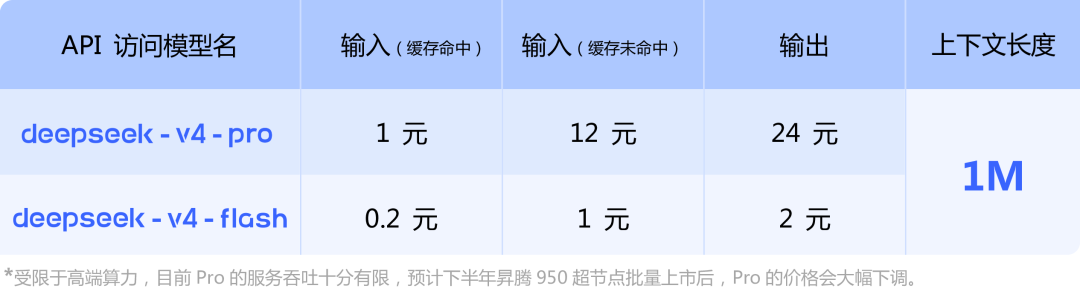
Open Source as it gets in this space, top notch developer documentation, and prices insanely low, while delivering frontier model capabilities. So basically, this is from hackers to hackers. Loving it!
Also, note that there's zero CUDA dependency. It runs entirely on Huawei chips. In other words, Chinese ecosystem has delivered a complete AI stack. Like it or not, that's a big news. But what's there not to like when monopolies break down?
The incredible arrogance and hybris of the American initiated tech war - it is just a beautiful thing to see it slowly fall apart.
The US-China contest aside - it is in the application layer llms will show their value. There the field, with llm commoditization and no clear monopolies, is wide open.
There was a point in time where it looked like llms would the domain of a single well guarded monopoly - that would have been a very dark world. Luckily we are not there now and there is plenty of grounds for optimism.
Still not sure how I feel about China of all places to control the only alternative AI stack, but I guess it's better than leaving everything to the US alone. If China ever feels emboldened enough to go for Taiwan and the US descends into complete chaos, the rest of the world running on AI will be at the mercy of authoritarian regimes. At the very least you can be sure noone is in this for the good of the people anymore. This is about who will dominate the world of tomorrow. And China has officially thrown their hat in the ring.
I always find it an illuminating experience about the power of mass propaganda every time I see an American believe they somewhat have the moral high ground over China, despite starting a new war somewhere around the globe either for petrol or on behalf of Israel every six months.
Yes, but the framing when America does bad is that they mostly do good.
When China does good, it's always that they do mostly bad.
With China it's always pointed out how much power the state has over corporations there, but in the US out of control lobying is supposed to be 'concerned citizens expressing their opinions' or some shit. We're still supposed to take for granted that it is a representative democracy, if a flawed one.
Of course not, but that's never how Americans act. The commenter didn't say "I don't like that the only two serious competitors are from the USA and China", they ONLY called out China.
It's a small difference, but important. Especially because that person is far more likely to be responsible (voting) for and profiting from USAs bad stuff.
In fact, unless the comment is from someone living in China: understands the politics, it would only be fair to critique the authoritarian aspects of the government they actually know.
The issue is propagandists are typically brainwashed already.
They call us warmongers and then wonder why we don't want to help them fight their war. Now they say they want to be buddies with China which has been actively helping Russia with arms.
No I don't mean one needs to be American. The reciprocal isn't valid. I talked about China. Given the misinformation the "western emisphere" has been subject to, I would find it dubious to get the echoes of what mainstream media portrays it as, even though there are elements of truth in what most people believe.
The U.S politics are easier to understand from the outside. For one it's a democracy, a more transparent process despite a lot is happening behind curtains. I have no idea what North Koreans are able to make of the U.S scene, I know for sure people in U.S and Europe are hardly able to comment on N.K.
tldr: I'm with you non Americans (and Americans) are perfectly able to critique the U.S with some valuable accuracy.
Why do you assume that the information non-Americans believe about the US is accurate?
It seems to me that there is a fair amount of misinformation which gets spread about the US. For example, many non-Americans seem to believe that school shootings are a significant cause of death here.
Furthermore, your proposed scheme creates an incentive to be non-transparent and thus not vulnerable to critique. By closing off information about your country, you can say to any critic: "Your critique is incorrect, because you lack information." Thus creating a reputational advantage for countries which successfully clamp down on the flow of information.
Is that your desired outcome? You want a world where criticizing the US can no longer be done as soon as Trump kicks out all of the foreign journalists and stops the information flow?
He said "At the very least you can be sure noone is in this for the good of the people anymore. This is about who will dominate the world of tomorrow.".
I.e. he doesn't see the US as "the good guys" either.
Pointing out the war threat from China isn't hypocritical just because you don't list all the war threats from the US at the same time.
I think a lot of us are blinded by our own propaganda. I would expect many Chinese geeks to have the same values as us for the greater good of humanity.
> Just because America is doing bad things doesn't mean China is good, or vice versa.
Of course not. When it comes to SOTA LLMs you have the choice between two bad options. For many, choosing the Chinese option is just choosing the lesser of two evils (and it's much cheaper).
People are probably assuming that the trends from the last few decades continue. The EU fumbled semiconductors, production went to Asia. The EU fumbled the software revolution, the successes mainly came from the US. They fumbled the transition to smartphones despite the Nokia advantage. They missed tablets; seemed like they just didn't have the industrial vigour to make a serious attempt.
The safe money is they are going to be an also-ran for the AI revolution. They did manage to force Apple to switch from using lightening connectors to USB though so their wins can't just be laughed off. Maybe they'll surprise us but it'd be a welcome change from their usual routine.
>Production of state of the art semiconductors, yes.
If you fall out of the state of the art then the claim of EU fumbling semiconductors is correct.
>NXP, STMicro, Infineon are still there and massive in automotive, industrial, card chips, etc.
The EU semi companies you listed are absent from the state of the art and only make low margin commodity parts that don't have moats. No, ASML is not enough for claiming EU superiority since the EUV light source is still US IP designed and manufactured.
>Worldwide massive success, mostly yes.
Worldwide success is where the big money is, and you need a lot of money for cutting edge research and experimentation to build the future successes. Hence the claim of EU fumbling software is correct.
>Most European countries have their local or regional success stories though.
EU mom and pop shops aren't gonna make enough money to be able to afford risky ambitious ventures the likes of FAANGs have. Which is why you work for Hashicorp, a large global US company, and not some local EU company.
Europe is always 10 years ahead in all theoretical aspects.
Then they need money.
So most of the talent flee or get bought, typical example in machine learning space is huggingface or fchollet.
Then European government plays catch-up and offer subventions, but at the same time makes rules to make sure companies don't threaten US dominance, or Asian manufacturing.
Mistral is typically playing catch the subsidy game.
Europe is constructed so that it can't win, but can "pick" the winner between scylla and charybdis, pest and cholera.
>Europe is constructed so that it can't win, but can "pick" the winner between scylla and charybdis, pest and cholera.
Because they have no spine and no leverage/muscle on the international stage to throw their weight around and make sure they get what's best for themselves at the expense of everyone else the same way US, China, etc do.
They play the international nice guy that just ends up being the doormat everyone takes advantage of, being at the mercy of Russian and Azeri gas, at the mercy of US tech, energy and defence, and at the mercy of Chinese manufacturing after dismantling their own manufacturing, at the mercy of Turkey for migration enforcement, etc so they can't do anything radical that upsets their partners, or that makes their virtue signaling policies look bad, or risk massive repercussions they aren't prepared for, so they just turtle, bury their head in the sand and pretend everything is going fine while falling further into obscurity.
But this makes zero sense. Two different continents, values systems, law systems. Not to mention the current USA administration is openly hostile to Europe. So why would anyone confuse the two.
Europe is at the mercy of the USA. Any difference in posture is due to local politics which can swing local elections, but European leaders are willing and eager to do what the US wants.
> Just because America is doing bad things doesn't mean China is good, or vice versa.
When someone points out hypocrisy, this is "the answer", it seems. But it is just a statement, not a rebuttal of the hypocrisy that was pointed out.
Hypocrisy is still hypocrisy.
And bad things are bad things. Yet no amount of propaganda (red scare, "eew dictatorship", Uyger-genocide, Taiwan threat) can convince me that the China is as evil (or more evil) than the US-Israel alliance of the the last 50 years.
Hypocrisy would be if the person only points out Chinese authoritarianism without acknowledging problems e.g. in US policy.
Not mentioning US problems every time they criticize CCP problems is not automatically hypocrisy, and this idea basically means you cannot criticize anything without criticizing everything someone considers just as bad or worse at the same time.
Calling a discussion on China hypocritical because it doesn't say "but US worse" is essentially trying to build in whataboutism into every discussion.
It's a symptom of increasing polarization and part of the problem.
The difference is that there was (at least an illusion of) choice. Nobody said that it is a perfect system. And Trump will be gone in 3 years, while Putin and Xi will stay in power until their death.
I don't understand why Americans continue believing that democracy is the only way for every population in the world
Why would Russians want democracy? Or the Chinese, for that matter? There have been zero democratic impulses in their societies across hundreds, even thousands of years.
The west needs to rest its democratizing mission and accept that every society is fundamentally different
My country (India) got a "thriving" democracy, but because there is no real democratic impulse in the society, everything on the ground has devolved into what the society was always like - quasi-feudal bureaucracy
>I don't understand why Americans continue believing that democracy is the only way for every population in the world
Well, ideology. I believe my way is the only way for every population in the world too, and I fight for it to happen. Of course, each place adapts to their own condition, but I believe my core ideology is the way for humanity as a whole, and I believe it is the same for people who defend western american-style democracy.
An ideologically driven subset of urban educated youths that was proportionally a tiny subset of the entire Chinese population marched for it in 1989. FTFY.
They are ruling themselves in the sense that their governing systems are emergent consequences of their own cultures. All peoples ultimately deserve the governments they have.
> I don't understand why Americans continue believing that democracy is the only way for every population in the world
It's not Americans, it's educated people who believe in personal liberties.
> Why would Russians want democracy
Because they would have a choice if they want to be robbed blind by a bunch of oligarchs, and if they want to be sanctioned off from the world because the supreme leader decided he wants to kill and maim a million Russians to achieve nothing more than killing Ukrainian civillians.
> There have been zero democratic impulses in their societies across hundreds, even thousands of years
Absurdly bad historic revisionism. Russia had democratic impulses in 1917 and 1990, both hijacked and went nowhere. China's 1911 revolution was also overtly democratic in nature, but was also hijacked.
> It's not Americans, it's educated people who believe in personal liberties.
I find this attitude deeply parochial and colonial. Who are these so-called "educated people" (most of whom would be in western developed nations) to decide what sort of governance system a country should have?
The democratic revolution in America and France came from its own people. If the Russians or the Chinese want democracy, they'll get it on their own
Western hand-wringing about the "lack of democracy" in foreign (usually poorer) countries is just concern-colonialism. I think most of these educated people should focus on their own countries and let the rest of the world be
At some point I saw an analysis that looked at the policy/political differences between the different fractions of the Chinese communist party and compared them to the spread in a western parliament (I don't remember which one I think US or UK). They found that the spread was very similar. With that I'm not saying that the Chinese system is better, just that these statements are not as straight-forward as one things.
I think a much better metric is suppression of dissent, human rights records etc., not (the illusion of) choice at the poll booth once every 4 years.
The marketing pitch of Western "democracy" has always been that you can criticise your government freely and the government won't jail you or murder you.
Also, consumer goods.
The voting and multiple-branches-checks-and-balances elements are sidelines.
Currently none of those promises are true in the US. The government is murdering and jailing people for whimsical and self-indulgent reasons, the consumer economy is about to crash, and the only checks-and-balances are the checks going straight to the Emperor's private accounts.
To be fair, there's some judicial pushback, and some political friction.
But Senate and Congress are wholly captured, the opposition is flaccid and foreign-funded, media independence is a myth, and the last time The People had any real influence on policy was the 70s. Possibly.
I have no idea if China is "better". From a distance China seems to be doing much better at building useful things and making long term plans.
But ruling cliques always seem to end up being run by psychopaths, so my expectations for humanity from China's rulers aren't any higher than those for the US.
I mean the American people who will cry about humans rights records in China will also watch masked government agents shoot down their own citizens just because they're suspected to be illegal immigrants
I'm going off democracy, at least how it is currently implemented. It is proving far too easy to pervert.
It turns out that the people will vote for some terrible things in order to get that one petty little thing a given candidate promises and they want, or because they don't like something specific about the other candidate(s). And of course many may later say “well, I didn't vote for that” when they quite demonstrably did.
Well, the politicians learned how to game the system well. Now people need to learn how to game the politicians. A formal verification process of pre-election promises would be a good start.
Nobody cares that politicians don't keep pre-election promises. And in most cases they shouldn't, circumstances change. You can have no intention of doing something, then something else happens, and you change your mind.
The problem is that people put stock in pre-election promises, rather than voting for the character of the person they want to represent them.
> When a measure becomes a target, it ceases to be a good measure
The measure is the number of votes. "What shall we have for dinner" measures things, there's no target in a "curry vs pizza vs thai" poll, and it doesn't really matter, the target is a nice night in with a film.
However with politics, getting power is the goal, thus the number of votes is thus the target, and thus its not good at measuring what the country actually wants, just who can best get the most votes.
This isn't new, but modern brainwashing allows manipulation at a scale hitherto unseen.
How can there be democracy in an environment where freedom of thought is all but nullified due to social manipulation through mainstream media. Calling something ‘free’ doesn’t make it so.
The reality is that the term democracy in western society has essentially become meaningless due to the swathes of algorithmic manipulation which occurs every second of everyday through every possible digital medium.
To be fair, Deng Xiaoping's reforms were based on the older New Economic Policy or NEP from the 1920s USSR, so it had been tried at that point. It was scrapped in the USSR for other reasons, not because it failed.
The moral weight of democracy is heavily overrated. Of course democracy is better than autocracy, all other things being equal. But I don't think a democracy that starts wars and bombs a new country every other year is morally superior to any relatively peaceful autocracy. Rather the opposite.
A lot of people voted for someone who was known to be an evil crook. It was very clear that he got into politics for praising his own ego. They voted against 'the good' in the hope for their own benefit and against that of the world. If they did not 'expect' the current state of affairs then they just refused to listen to their own heart.
As far as I'm aware most autocratic forms of government have to clamp down on dissent with some level of force, be it violence or imprisonment or seizing assets. It means people are afraid to criticise power.
Western democracies don't have that problem. Yes, they have other problems. Many problems which are hard to solve. But if you live in a western democracy you can freely criticise those in power without fear of retribution.
He didn't even say anything outrageous, he's just participating in the discussion. People can create accounts to be able to reply to a discussion, even throwaways.
No, but believing our so-called "democracy" (quotes intended, read: "21st century western systems") is how you give people "a choice" is the moral high ground. That is your axiom, but it's often touted as a tautology.
The name says "demos" and "kratos" but names are names, not facts.
There are many ways to give people a choice and this one has proven to be quite ineffective at that, as it slowly devolved into a plutocracy/oligarchy. Iron law of oligarchy, yadda yadda.
What they are very effective at though: crushing dissent, calming the masses with a reassuring illusion of choice, and touting itself as the "one true way".
When I look at the outcomes I don't see any semblance of democracy, only a ritual dance/theatre show every 4 years. A farce as big as the "democratic" instruments on the PRC.
There's a reason this "democracy" is very diligent at discouraging association and unionizing. Those give actual power to the people (and with power comes choice). That's dangerous. People might start believing they can actually influence the outcomes.
> our so-called "democracy" (quotes intended, read: "21st century western systems")
Do not conflate the broken American political system, the semi-broken British one, and the whole rest of the "west". Each country has its own political system, and they are wildly different.
> crushing dissent
Democracies are good at crushing dissent? Compared to other political systems? That's just not true. All other political systems rely on universal truth and unwavering trust in a person / religion / clique of people, who can do no wrong and can never be criticised.
> There's a reason this "democracy" is very diligent at discouraging association and unionizing
What? You are probably talking about a specific democracy, and the most broken one at that.
As someone from the "whole rest of the west", no, they're not different at all. Very minor details change, but the net outcome is the exact same and suffer from the exact same problems.
You can't escape the iron law of oligarchy.
> Democracies are good at crushing dissent?
They're not only good: they are the best. You don't need to curb dissent by violence if you discourage dissent by social manipulation. It's the cheapest and most effective tactic: keeping the populace docile.
If you manage to equate "democracy" (again, quotes intended) with democracy (lack of quotes intended), most of the work is already done.
"What are you, antidemocratic!?"
"Don't blame me - I voted for Kodos"
There's a reason my country's system trembled when the bipartisan system was challenged as new parties emerged... but it was curbed within two legislatures without a single shot fired and now we're back to an even stronger bipartisan representation. Quite the fine job, actually.
We even have a name for this: "the state's sewers". They're very effective.
Heck, even the EU parliament reflects this. Now it's PfE's turn and they will fail just like the alt left and the libertarians did in the last two legislatures. The antibodies are already in the bloodstream and the "two" (read: one) big parliamentary groups are signing their covenants to stop them. Trump's actions are just the nail in the coffin, PfE is pretty much DoA and you can see the individual members scrambling to distance themselves.
Chinese propaganda seems to hit very hard these days. If you really don't know, you seriously need to check what media you are consuming. Yes, the US has huge problems, many old and some new, but on a serious technical level the answer is (at least for now) 100% clear.
All empires are to some degree evil because their agenda is to dominate weaker peoples and nations. They almost all committed crimes against humanity and genocides if you look retrospectively from the todays point of view. Even our beloved Roman Empire that the Western civilization is built upon was genocidal empire.
Not sure if we can call it "beloved". For sure respected for what it did to build the base of modern civilization, but we are aware of its dark sides. And probably Nero would be an excellent example of what can happen to the empire and its people when a crazy person becomes its ruler.
One province of China has enough hellish nightmarish bullshit going on caused by the CCP that we maintain total moral superiority over them. It’s not even a question to anyone except “fellow travelers”.
Neither is the US, land of slaves, segregation, and the KKK. They did seem to get better there for a few of decades, but sure are working hard to return to their roots.
Isn't the US building mass detention camps right now for all the brown people there? And arresting / detaining / demanding papers from any and everyone? With federal agents killing civilians?
Don't get me wrong, China is also horrible here, they have their own camps.
But pretending the US is positive wrt human rights is a wild take in 2026.
> sn't the US building mass detention camps right now for all the brown people there?
Why would you think that?
> And arresting / detaining / demanding papers from any and everyone?
I have lots of friends from outside the U.S. that come regularly and don't find it onerous. Maybe it depends where you are coming from?
> With federal agents killing civilians?
OK, I agree that there are issues, and even very serious ones. Obviously, not on the level of China, but still serious issues. Nonetheless, what you see on left leaning media is not representative of what is happening on the ground throughout the U.S. Not even close.
IMO, the US is definitely positive wrt human rights. There are issues, but you can go to a No Kings protest, and live your life happily without issues, and it is hard to find another country that is nearly as forgiving. And it at least has people trying to spread concepts of individual liberty, vs most countries in Europe, almost all countries in Asia, and ALL Muslim countries, that are leaning to removing individual rights.
With the number of wars that the US have waged over the years including in Vietnam, Iran and supporting Israel. I don’t think even the US has done a stellar job in defending human rights.
If you meant American citizen human rights, then you’re correct.
> If you meant American citizen human rights, then you’re correct.
Not even that. ICE has already killed US citizens, they no longer prohibit segregation, trans people were banned from the military, and many more. All of those affect American citizens.
For now indeed, the people that want to get rid of it are currently in power.
The US was one of the first democracies in the world, and many countries followed suit. But the US hasn't kept up, and now the powers that be have exploited the weaknesses in the system. With arguably the biggest one being giving the president too much power (appointing supreme court justices, executive orders, etc).
Democracy in most of the countries is just theater. Trump promised no more wars iirc.
Don't get me wrong, I'd rather live in a country without a million cameras that automatically fine me for crossing the street illegally but I don't actually deceive myself in thinking my vote counts for much.
China at least banned the use of facial recognition in public spaces by their supreme court in 2021 (and then further strengthened the ban in 2024 and also got the PIPL).
If you're thinking of the "social credit" system please know that that's just an online meme. China's credit score system is not even nationalized and not nearly as invasive as the US's credit score system, which can sometimes determine whether or not someone is allowed to buy a house.
Besides their own credit score system, the other thing that sometimes gets labelled the "social credit system" was an attempt they had to track the behavior of business leaders and elected politicians. Basically anyone who holds social power but not the common person. This also never really took off and was not ever nationalized/centralized.
> I see an American believe they somewhat have the moral high ground over China
The elected government of the US has the moral highground of over the regime that killed the KMT in it's weakened state after the KMT defeated Japan, went on a rampage against the educated classes, mowed down its own people with machineguns and tanks when they demanded a say in their own governments, and kidnaps people advocating for democracy to this day, including Jack Ma.
> despite starting a new war... on behalf of Israel every six months.
The war started when Hamas, funded by Iran, went on a murder and rape rampage against Israeli civilians.
I don't see the issue. China hosts the alternatives or the only game in town for lots of technologies. China has every interest and right to create products. Not everything that comes out of China is some devious plan to do terrible things. It's people trying to make money just like you and me.
I am not washing away the authoritarianism, but take a look at other economic super powers directionality. Or that of tech ceos as well. At least Chinese tech companies aren't going around praising wwii Germany, writing manifestos, and bombing children at school or fisherman on whims. It is difficult not to see more countries regardless of leadership putting their hat in the ring as a net positive. Especially if it increases sustainability and lowers the price, which this very clearly does. It's even open source...
> Still not sure how I feel about China of all places to control the only alternative AI stack, but I guess it's better than leaving everything to the US alone.
Fully agree. From a US perspective, that sucks. For everyone else it's pretty great.
At this point the world's opinions of China are better than those of the US in some polls. One country invests and helps build infrastructure on a massive scale globally, the other alienates allies, causes countless conflicts, and openly threatens to end civilizations.
Indeed, even if one isn't partial to China, there's reasons to be glad that an increasingly hostile US has powerful competition.
> This is about who will dominate the world of tomorrow.
For this you'd need a technological moat. So far the forerunners have burned a lot of money with no moat in sight. Right now Europe is happy just contributing on research and doing the bare-minimum to maintain the know-how. Building a frontier model would be lobbing money into the incinerator for something that will be outdated tomorrow. European investors are too careful for that - and in this case seem to be right.
Yeah it's confusing. I mean China has work camps for Uighurs and is very brutal on Tibetans etc. OTOH, their leader is not setting the world on fire every second week and compared to Trump seems like the paragon of reason on the surface. Of course we know it's a facade but man what crazy times to live in.
If Trump acted more like Xi with regards to public speaking, but the actions were still the same, thing would be a lot different.
My point is that Trump could sign/execute/order all the same exact things he's done, but if I just never spoke about it, or kept hidden like Chinese do, he would be compared MUCH differently.
If someone like Trump could talk smarter, he would be smarter and would do things smarter.
That would also make him a lot more dangerous. After all in his first presidency he was still the man behind the biggest military on the planet but he knew shit on how to leverage this. In his second term he is even more loose but loose is tempertantrums and simple short sighted strategies. Easy to read, hard to accept.
You do realize that the US has a greater percentage of it's citizens in prison than any other country, including China?
In the US its not the Uighurs or Tibetans who are being oppressed - it's the blacks and immigrants. The US elected a president who characterizes immigrants as rapist and murderers (while he himself is a convicted rapist, suspected pedophile, and wants to commit war crimes in Iran).
The facade, believed by many Americans, is that USA is the land of the free, a democracy (despite no popular vote) one of the good guys, but actions say otherwise.
Moral stances aside, I'd argue it's healthy that the US gets competition from abroad. I appreciate the boost that the world is getting from China - infrastructure and construction projects are a huge benefit to economies. Their focus on green energy has caused a huge influx of affordable solar panels, home batteries, EVs, etcetera, helping reduce the dependency on fossil fuels - while the US and especially the other big money spenders in the middle east would rather the world remain fully dependent on them. But for the past years Europe and now Asia are feeling the pain from being overly reliant on that.
China's policies and government aren't morally defensible and I do fear that they will become more aggressive in spreading their influence and policies onto other countries, but from an economic standpoint what they're doing is super effective. While the previous world power (the US) is stuck in infighting and going through cycles of fixing/undoing the previous administration's damages, instead of planning ahead.
You’re right… but that’s on the rest of the world not getting their shit together.
It’s this sort of example (and not properly supporting Ukraine, and not agreeing how to collectively deal with migrants, and not agreeing how to coordinate defence, and myriad other examples) that highlights what a pointless mess the EU is. It’s not a unified block - it’s 27 self-interested entities squabbling and playing petty power games, while totally failing to plan for the future with vision.
The EU could/should have ensured that a European equivalent to OpenAI or Anthropic could thrive, and had competitive frontier models already; instead, they’re years and countless billions behind.
The EU pouring even more billions in this would just have meant pouring billions on US tech. China is winning on all fronts at this game because of the embargo, they end up even more vertically integrated as a result of it.
The important thing is that LLMs are well-dispersed and the technology is relative open, much more open than it could have been. Alternative worthwhile LLMs will emerge from Europe and other non-US western countries once the economic incentives are there.
Competition with the Soviet Union gave all the workers in the world better conditions, also advances in science and technology... (And risk of mutual destruction ;)), even if the USSR wasn't good.
China doesn't even care about Taiwan anymore, their saber-rattling about it is a convenient distraction while they quietly make it completely irrelevant in the next few years.
It does seem the idea is to get the Taiwanese people to want to choose to rejoin China by making China far better for people to live than Taiwan. Maybe that will be via democracy (i.e. China manipulates the people of Taiwan), or perhaps it will be genuine (i.e. China provides a far better lifestyle for the average person than Taiwan)
Mistral has a different focus. They aren't taking on trillions in debt risking their entire economy to produce useful products.
I think they are leaders in the democratization of LLMs. Almost everyone has a computer right now that can run a useful variant of a Mistral model. I hope they keep their focus because what they are aiming for likely has the biggest impact on the average person and would be the best case scenario for the technology in general.
AFAIK: Current Mistral models are not competitive with SOTA-models that come out of the USA or China. They are "good enough" for enterprise usage when you don't need SOTA performance.
Their main selling point is: They are neither US-American nor Chinese. That's a real moat in today's world. I think at the moment they feel quite comfortable.
I'm no huge fan of America, but claiming China is as good or better at innovation is asinine.
It costs 100-1000x less manpower, money, and time to hug the heels of innovators than to actually pioneer. Say what you will about America but they absolutely lead technological innovation and it's not even remotely close.
Deeper than the inability to digest. The incapability to comprehend it.
China's fall in the 19th century came at them for the same reason. How could these European savages be stronger, thus better than us? Our intelligence service must be out of their mind.
America has been making short term and short sighted moves to try to widen a gap that cannot sustain. They have chosen the wrong strategy out of fear and greed. Cooperation is the right strategy. Isolationism will not work in the long term except for maybe the handful that drove it. The irony is that it's an anticompetitive and anticapitalist move to do what they have been doing, so it's not even on principal.
As much I apprecite the sentiment, I think it is too early to declare that the well guareded monopoly is over. Yes, these models have answers, but don't expect all the large enterprises to switch to these models. The other aspect is scaling to serve these models will need a lot of time even if Huawei succeeds. Not all the Governments trust China and there will be a lot of resistance to work with these models eventually, even if cheaper.
I don’t know if we’re ahead of the curve but that tired feeling has started turning into hate here in the EU. I guess being threatened with invasion does that to you.
The next decade is going to look very different with America Alone.
I grew up in the states when I was younger, always feeling some closeness to Americans even after I moved back to Europe.
With all that goes on it has changed. Recently I sat on a plane near some Americans discussing their holidays here, and I noticed I felt contempt. Sitting their with insane privilege as their government torches the world.
Individuals remain individuals, and one really ought not to be prejudice. However the lack of resistance I see in in the “land of the free” as their “democratic” institutions collapse just makes me believe they never cared at all. In France cars are torched if the pension age is raised. In America the rise facism apparently doesnt matter to them.
>However the lack of resistance I see in in the “land of the free” as their “democratic” institutions collapse just makes me believe they never cared at all.
Largest protests in US history just in the past year:
My sister and brother recently graduated from college, have been searching for jobs for over 6 months, they can't find anything. They're politically liberal Californians.
From my small bubble it's not that. I'm Dutch, married to an American who now knows enough Dutch such that we can treat it as a secret language when we're in the US.
My family in law seems to swing slightly republican. As a Dutchie, I could get some answers because I'm too naive not to talk about politics. So I got to probe a bit. What I simply found was that they'd say "I can't trust the news, none of it. Not CNN, not Fox News, nothing". Then I'd say "well in the Netherlands, I'd argue that while news outlets have their bias, you can trust them on basic factual reporting". She looked at me with a stare that I could only describe as "oh but honey, you're too young and naive to understand". To which I thought "you don't know the Netherlands. We're not perfect but we're nowhere near as deranged as what I'm seeing here".
I think that explains a lot of it for some people. The trust in the media, all media, is completely broken. Trump has how many fellonies now? Can't trust it. Kamala is doing what now? All talk. DOGE is fixing the government? I fucking hope so! But can't trust the damn news. Whether they do or don't, they are always burning money, god damn bureaucrats.
I feel that's the mindset that my family in law has.
> I can't trust the news, none of it. Not CNN, not Fox News, nothing
This view gets echoed here on HN a lot. I find it very strange to be honest, because I tune in to CNN and I see lots of bias in the commentary and editorial, but when it comes to factual reporting they are pretty straightforward and down to earth. It seems to me that the real issue is people don't seem to distinguish between reporting and editorial content / commentary. Stop watching that garbage and actually consume the factual content and analysis. Yeah it's dry and boring but if that isn't enough for you then it just shows you never cared about facts in the first place.
> but when it comes to factual reporting they are pretty straightforward and down to earth.
No, not really. I mean for me, yea, sure, easy. But in the general case? It depends on who you are.
The reason I trust CNN is because when a Dutch news source reports more or less the same thing, I can easily see the reporting matches with that of CNN. Because of this, I personally have some built up trust with CNN. When I look at Fox News, oh deary... it's nothing like what I see on the Dutch news.
This is not something I do consciously, it's simply that I happen to watch Dutch news sometimes and I happen to see American news sometimes and it costs no effort for me to compare. Combine that then with that on HN I also sometimes see BBC and similar British venues (e.g. The Economist is also British I believe?), and now I suddenly have 3 countries worth of news sources.
Many Americans don't really know that the UK exists other than that they rebelled against it. Many Americans almost haven't left their 20 mile radius world (many also did of course). But it's these people that I tend to have a lot of in my in-law family or however you call it (schoonfamilie in Dutch). I'm quite exotic to them in that sense, and definitely foreign. Thank god they have some Dutch roots.
Point being: with that mindset, you're not checking out what the BBC has to say on a topic. You're checking American news, not because of patriotism but simply because of that's all you know and going outside of what you know costs effort. And you already have a job to do, come home late, just want to watch your shows in the evening and that's it.
I am by no means saying that this is representative for all Americans, it isn't. What I am saying is: I see this a lot in my slice of the US. The reason I'm sharing it is because what my in-law family is saying is definitely at a much more personal level than whatever conversation I've had with some random, but lovely, person from a hacker space or hacker house in San Francisco.
Yet, I don't see this view a lot on the news. Nor do I hear Dutchies talking about it, they are simply out of the loop when it comes to a view like this. I don't know how prevalent it is, but if many people of a family of 50 to 100 people is in a situation like this, then my bet is that they aren't the only family.
My running hypothesis has been the trust breakdown arises from social-media overexposure driving lazy nihilism, which in turn gave free reign to a uniquely-corrupt class of politicians. But I'm not sure how to neutrally evaluate that.
I think the collapse of public trust was very intentional, and the result of a much longer term effort than social media.
The most famous examples are likely the tobacco industry spreading misinformation through self-funded studies and experts, and the fossil fuel industry doing the same to seed doubt about climate change. But of course we can think of countless examples of entire industries and individual large corporations pushing out misleading bullshit, threatening or outright killing journalists and activists to cover up their catastrophic fuckups and their chronic conscious excretion of negative externalities.
This has all of course been going on since the dawn of time, but to focus on the last century in the US, we've seen all sorts of corporations and coalitions of rich and powerful people push misinformation into nearly every sector of our society - universities, science, journalism, politics, etc. in order to undermine confidence in shared facts, corrupt people's ability to discern whether or not something is fundamentally true, and sow confusion so that they can continue to operate in perpetuity in this chaotic maelstrom of doubt.
Lots of capture of government towards these ends as well, we can look at the concomitant constant cuts to education in order to weaken people's understanding of the world and ability to think critically. The revocation of the Fairness Doctrine was probably a step change, and Trump represents the sharpest recent escalation of all this.
From day one, he's done everything he can to shred any collective notion of shared objective truth. Anything he doesn't like is fake news, and the idea that the media is lying, scientists are lying, experts are lying, and institutions are lying, he has spread so fucking successfully through society, to the point where Americans no longer have anything like a shared sense of reality.
It seems like we're being reduced to tribes who are organized primarily around faith in various charismatic individuals.
I think this is fundamentally the worst thing he's done, because it lays the foundation for virtually every other conceivable and inconceivable abuse. If people can't even agree on what is happening, we're fucked. People and institutions in power can do anything they want to whoever they want, because the public has lost their ability to even recognize the danger posed to them collectively and thus mount any resistance based on a shared sense of reality.
Social media has definitely famously accelerated aspects of this like the fragmentation and the spread/magnification of fringe worldviews through echo chambers, but I think it's just one (and maybe this is controversial, but I'd be willing to be generous enough to think the 20something year old creators were too stupid to conceive of these long term consequences at first, but who knows, maybe not) element in a much longer and more intentional, malicious war against the many for the benefit of the few.
Not only that, but in tandem the collapse of social capital in the US has been the result of a very intentional process (on top of the multidecade undercurrent of declining social capital). This according to Robert Putnam himself (sorry, don’t have time to find the source now but will add it later).
This is quite interesting. I'm not sure what can to be done to reverse this?
When you've reached a level of untrust where you deem trust itself naive, how can you recover?
Teach Americans to look at news sources in other countries?
Shooting from the hip here. Feels like a duct tape hack on first thought.
I mean that's what I do, subconsciously. I think a lot of Europeans do this because a lot of Europeans tend to speak English and then their actual native language, or something similar (e.g. I wonder how Swiss people experience this).
I a European who spent the last decade in America and I'm not sure I'd call Americans privileged compared to Europe. With money being the one means you have to be treated well in society, comparing it to Europe, America feels like the hunger games. Want healthcare (ie surviving)? Healthy food? To own your house? Welcome to the games
As a middle-class American, I don't feel like I have much input into the Iran war. I've voted, I've signed a few petitions, and I'm open to more suggestions for how I can stop the war, but I don't really think I can do much else- protest somewhere I suppose and hope that's helpful somehow
As a European, how do you influence your government?
It’s not that it doesn’t matter to Americans. It is worse; half the population (or at least, half the voting population), is thrilled with the development of fascism. The other half has been ringing the alarm bells for well over a decade; it seems to make no difference.
And you’re right, most Americans do not understand the privileges they have or give one single shit about democracy; it is just not a salient political issue. But eggs… don’t get me started on eggs.
> The other half has been ringing the alarm bells for well over a decade; it seems to make no difference.
I feel like the issue there is that alarm bells in of themselves solve nothing. I won't extend that argument to one of its obvious conclusions, but instead I will say that efforts to attack education and critical thinking skills all contribute to people being susceptible to their democracy being corrupted and robbed blind - so having an educated populace with a sense of integrity and respect of human rights would help!
It's probably a bit more nuanced than "half this, half that"; when you look at the facts, most voters aren't that extremist. A lot of votes vote one way or the other because they would simply never vote for the other.
This is why the swing voters / swing states are so important in the US, because only a few million are flexible enough to switch sides.
Of course the core issue is that there's a two party system; while I'm sure that in a healthy democracy the current republican and democrat parties would be the bigger ones, they wouldn't have a majority.
> This is why the swing voters / swing states are so important in the US, because only a few million are flexible enough to switch sides.
Of course if the USA was an actual democracy, electing it's president by popular vote, then this would not be an issue - every vote would count to tip the balance in favor of who the people wanted to elect, not just the votes of the 20% fortunate enough to live in a "swing" state.
> A lot of votes vote one way or the other because they would simply never vote for the other.
This, for me, is the crux. Politics is treated like a team sport in the US, you pick your side and cheer them on no matter what. And team sports in America are even more bananas - you grow up supporting the Brooklyn Dodgers and a few years later they're 2.5k miles away with a new name. This seems a perfect example of what's happened / happening to the Republican Party - it's not the same party any more, but everyone who tied their entire personality to cheering for the red team is still cheering for it as it burns the country to the ground. I predict that inside ten years it will have also had the name change and probably be run out of Florida or somewhere.
not all of us are just "sitting here with insane privilege." it's quite dangerous for some of us right now.
I'm trans. this Administration does not like us. after Charlie Kirk's murder, things got legitimately scary. Musk was retweeting people who called us "deranged bioweapons" who needed to be "forcibly institutionalized." NSPM-7 is surveilling and infiltrating trans organizations. the Heritage Foundation proposed labeling us as "ideological extremists," in the same category as neo-Nazis. if I'm arrested, I'll go to a men's prison where I'll likely be given to a violent inmate as his cellmate to "pacify" him (V-coding.)
so yeah, I keep my head down. a lot of Jews kept their heads down in Germany in the '30s, you know? and just like then, it doesn't seem like other countries are too keen on taking us in as refugees. I hope that changes if things get bleak.
That's what happens when your ilk leaned far out the Overton window and did not listen to the repeated warnings to leave the kids alone.
Wanna play at being a radical without popular support? Don't see the necessity to police the mentally ill and moderate the extremists in your group? Well, FAFO is all the rest of society can say.
I suppose this could be rage bait, but would you justify the violence that the poster is afraid of also if someone is “ilk” of the other side of the aisle? E.g. white nationalist types?
Does being “extreme” justify extra-judicial violence?
> In France cars are torched if the pension age is raised.
This is not something to be proud of. You guys are giving yourself loaned freebies, retiring 5+ (!) years earlier than countries like BeNeLux and Germany, and are pretty much expecting the EU to eventually pick up the pieces which will drag us all down.
Other countries don't directly pay for the pensions, but France is staring into a giant fiscal abyss because of their low retirement age (and other generous social benefits). Any attempt to change those results in the country being taken hostage by rioters, thus nothing changes.
At some point France will be in too deep shit and will look to the EU to cover for them. We will all pay for that. And it is deeply unfair because other countries their citizens have accepted later retirement and more frugal benefits to keep their countries fiscally healthy.
France could cover the fiscal hole in other ways, but taxing corporations and wealth at a higher rate also consistently ends up being blocked. And each year the hole gets deeper.
> Any attempt to change those results in the country being taken hostage by rioters, thus nothing changes.
Your theory doesn't actually match with reality, given that Macron's retirement reform was passed into law despite protests. As currently enacted, the age of retirement in France will progressively increase from 62 until reaching 64 in 2030.
Reform wasn't passed, it was forced via a technicality after riots made it politically unpalatable, and it has put France in a governing crisis ever since.
Also, retirement in North, West and Central EU is 67+, not 64. Greece is at 67 too, although begrudgingly.
Again, I'd be equally happy if France covers the fiscal hole some other way, but I am not going to cover for a country that is willingly becoming the sick man of Europe because they want to live comfortably on borrowed time. Which, by the way, is a literal repeat of Greece its crisis. Time is a flat circle indeed.
It’s not bs. France is lobbying for “Eurobonds”, debt they can take at German interest rates and with Germans etc holding the bag, for about two decades now.
I'm American. If the choice is between the current US direction or China, then no, I don't think the word "healthy" should be anywhere near this discussion.
Meta, Google and co control all your private data. GDPR is a european thing not an american or chinese thing.
CIA/FBI have their own massive data centers (see snowden) inkl. their own older bigger palantr style software.
Elon Musk was able to connect a Starlink server to your data and no one cared. He and his Duche aeh sry doge baby boys were able to access and download all Social Security Numbers.
If someone knows were Putin and all the other world leaders are at any given moment, I would bet its USA first than China if even because i don't think China cares that much about it than USA does.
And everyone out of scope of this, lives probably in some rural USA town were no one cares for you at all anyway, but thats the same thing as in China.
Really laugh my ass off, so much whataboutism and American centrism when the debate is whether China is trustworthy on AI. Given your ignorance you should go and do your research, but I will help you a bit here.
- Control goes beyond politics
state corporation monopoly, 党支部 in private sector, crackdowns on NGOs and charities.
- A single, all-encompassing ideology
Party led, mandarin speaking Han Chinese nationalism, blended with Little Pink's unquestionable support for Xi and the party.
- No meaningful private sphere
社区网格员
- Mass mobilization and propaganda
We saw mobilizations on Chinese social media, attacking celebrities who don't openly say anything the party wants them to say. Mobilization in real life is rare though, cos it had shown it can backfire.
tiananmen square was in 1989. Hong Kong was snuffed out like a light. Covid saw people caged and sealed in their houses. You do not need to look back at the cultural revolution to see the prc for what it is.
Is your contention that Hong Kong is also a totalitarian society? Have you been to Hong Kong in the last 5 years? I feel like people saying these sorts of things are just completely divorced from reality.
> Covid saw people caged and sealed in their houses.
No. There were a few incidents very early on, when everyone was (quite understandably) panicking about a new, deadly virus that nobody had ever seen before, when some local city officials barred the doors of people who had just come from Wuhan. That was a scandal inside China, and it was immediately reversed.
What China did do quite extensively was border quarantine, and during localized outbreaks (caused by cases that slipped through quarantine at the border), mass testing and quarantine measures. This was during a once-in-a-generation pandemic that killed millions of people. In China, these measures saved several million lives. The estimates are that China's overall death rate was about 25% that of the US, and these measures are the reason. By the way, Taiwan and Australia took nearly identical measures, and I very much doubt that you would call them totalitarian societies.
> That was a scandal inside China, and it was immediately reversed.
Tell it to the people in Wuhan, and Shanghai, Urumqi, and other cities that had lockdowns. I was in Shanghai in 2022, I was confined to my apartment for nearly 3 months, you couldn't be more wrong.
Trump's smarter than he lets on. He plays the buffoon in public, but he's smart enough to have gotten elected twice. Which is two times more than I've managed to.
People in China live under totalitarian rule, that much is true.
But how free is the average North American, where getting sick can bring you and your family financial ruin? Where the "free press" is controlled by corporations who are also the main source of campaign funding for politicians? Where their urban spaces are designed to require you to have a car and promote complete atomized individuals?
..you forgot to mention that any technology in China, foreign or domestic, can and will be used for and to the benefit of the -military- party.. But like someone posted: "not perfect" fits the bill.
Check out the Sean Ryan Show with Palmer Luckey on China and military tech.
Outside of gay people, the rest is your projection: they are homogenous society, racial problems are nonexistent. US is heavily heterogenous and despite that you segregated like a third of society at the time.
This is such a tired argument, and morally repugnant. Where is the UK in the race, where is the EU? Lets get of our asses and stop moralizing.
(China wiped out the entire EU industry through a "quiet" trade war since like the last 15 years, and we're not really talking about that aren't we...)
Not so much a trade war as basic economic forces, and it's been going on for much longer than that. When infrastructure improves, companies and customers can look further to get their stuff done. If it's cheaper to do your industrial or manufacturing work abroad and have it transported to your country, that just happens.
The powers that be try to slow this down by banning imports outright (you can't for example import American chicken into Europe because of food safety laws), or high import taxes (Chinese EVs have a 50% import tax in Europe and the US to protect the local car manufacturers. Which is fair because the Chinese EV manufacturers are state-sponsored so their prices are unfair. Then again, western companies get billions in investor money to push the prices down).
You mean the west handed their industry to china over the last 15 years? Its not like the US is any better off in this. The EU is not a country, so you can't talk about it as if it was. Each country has their own companies and industries. There is AI in Europe, and its growing, however we might not be as "energetic" about destroying our countries to build giant data centers to serve our billionaire overlords. That does not mean that there is no investment, there is, including a bunch of American corporations like Amazon. But there is also a lot of corruption and bribing (lobbying - lets call it what it really is, no more whitewashing) going on around that too.
So again, stop referring to EU as a country, we are not, and it just annoys any Europeans as it comes of as "Americans who don't understand the world outside of the USA".
america is a continent. let’s take back our vocabulary (fellow european here).
the little orange man shows very well what i mean when he started giving names to the gulf of mexico.
"In English, North America is its own continent as is South America. The two can be collectively labeled the Americas or the Western hemisphere. Canadians frequently refer to themselves as North Americans and never as Americans. To insist this change is to demand the entire world’s lingua franca redefine words and thereby cause mass confusion for its speakers simply because doing so would be consistent with an arbitrary definition found in a foreign language."
As someone that lived in Britain for 15 years until 2024, I'm not sure a nation with a GDP per capita lower than Poland, that is now poorer than every state in America, with a gang rape epidemic the government tried to suppress investigating should really concern itself with how other countries are ran.
As a different Brit I do not accept such moral relativism.
China’s governments actions are on a completely different level - for example:
“””
Since 2014, the government of the People's Republic of China has committed a series of ongoing human rights abuses against Uyghurs and other Turkic Muslim minorities in Xinjiang which has often been characterized as persecution or as genocide.
Why do we ignore all the human right abuses the US perform abroad? Iraq, Afghanistan, now Iran, Gaza and Lebanon through Israel, support to Saudi Arabia (which would not exist without the US), El Salvador... And inside it's also horrible with its treatment to immigrant.
That should be at least comparable (if not worse) than what China is doing.
El Salvador is blessed by evil criminals put away from the streets. It took thousands of those who you defend for a whole country to be free to enjoy tranquility and security. I was born there and I know better than you calling us evil
This is how china tried to justify its genocide against uighers. Was theboutrage against that just politically motivated? Or do americans only care about ethnic cleansing when theyre not the ones doing it
It's a little insane to me people comparing negatives of US and China. I mean, the simple fact we're allowed to say just about anything we want that is critical of the administration on this forum, in English and nothing happens is clear there is no comparison.
You have no idea the full breadth of the Chinese government because information is closed so quickly, in America it's all on display right in front.
The US supports the genocide in Gaza, it supports the bombing of Lebanon. The US itself has now started (another) war and bombed Iran.
China is repressing the Uyghur and threatening Taiwan. I don't agree with these actions but is really "orders of magnitude" worse than the destruction the US facilitates in the Middle East?
With Trump they are now openly hostile to European democracies, and ICE and doing their best at repression within the US.
It's 2026 and people still believe this Uyghur genocide propaganda? In the meantime, Israel and the US have been killing people in the middle east for years, but china is "on a completely different level"?
Jensen Huang said this in his recent interview - that China has the best/most engineers, it has the chip making ability, it's a good thing they wanna build on a Nvidia stack - but if you push them they will build on an all Chinese stack - but the interviewer was being a numb head who kept parroting the propaganda of Western tech supremacy
My guess is Chinese govt is going to mandate that labs switch all future training and inference to Huawei. DeepSeek has shown it's possible. Once they are done, the rest of the world is going to be buying Huawei! I for one can't wait for a cheap Huawei GPU!
Let's see how long it takes before the big US AI companies start lobbying to outright ban use of Chinese AI, even the open source / local models. For "national security" reasons, of course.
> Let's see how long it takes before the big US AI companies start lobbying to outright ban use of Chinese AI, even the open source / local models. For "national security" reasons, of course.
Does the 'zero CUDA dependency' also count for running it on my own device? I have an AMD card, older model. Would love to have a small version of this running for coding purposes.
Really nice to see the Chinese are competing this strongly with the rest of the world. Competition is always nice for the end-consumer.
As a Chinese, I feel tiered, it's like the cold war, what is takes to keep competitive with every aspect, it's just another win for the country and the corp
This is a pretty banal comment at this point. Open source is the term used in the LLM community. It's common and understood. Nobody is going to release petabytes of copyrighted training data, so the distinction between open source vs weights is a rather pointless one.
If you don't have the source code then it makes no difference. If you have the weights and are running some model via llama.cpp, then you are using whatever API llama.pp is using, not the API that was used to train the model or that anyone else may be using to serve it.
For me open source means that the entire training data is open sourced as well as the code used for training it otherwise it's open weight. You can run it where you like but it's a black box. Nomic's models are good example of opensource.
Theoretically yes. It is entirely possible to poison the training data for a supply chain attack against vibe coders. The trick would be to make it extremely specific for a high value target so it is not picked up by a wide range of people. You could also target a specific open source project that is used by another widely used product.
However there is so many factors involved beyond your control that it would not be a viable option compared to other possible security attacks.
I believe this is possible but unlikely. I don't think a Chinese company trying to break down the US's stronghold in this field would do this short term. I think it is in their best interest to be cheaper, better, easier, and more trust worthy until competition looks silly.
It's like suggesting BYD has a high likelihood of making their cars into weapons or something. It's not in the company or their countries interest to do that.
Sure it could happen but I bet it would only happen in a targeted way. Why risk all credibility right now and engage in cyber warfare?
BYD and Tesla have the same ability to brick their cars anywhere. It's less a "weapon" and more a way to cripple a subset of people overnight if they so choose. A general major downside of "connected" products.
Okay what gain does China or BYD or similarly, Tesla and the US get by crippling their customers products? It doesn't make sense except at the point of a ww3 scenario where China is an adversary. I don't follow the news too closely, but I see no inklings of that at least.
Yeah, it would specifically be in instances where global conflict is afoot. Aka what people are thinking about when they think about national security risks.
I don't mean that flippantly. These things are dumped in the wild, used on common (largely) open source execution chains. If you find a software exploit, it's going to affect your population too.
Wet exploits are a bit harder to track. I'd assume there are plenty of biases based on training material but who knows if these models have a MKUltra training programme integrated into them?
Do you think doing any of those things with in the next year does more to forward China as a super power then say, dethroning all of the US hype around LLMs?
Tech ceos are going around talking about how they will rule over employees and they will be unable to work in the future except for intelligence tokens. What if China commoditizes that without spending nearly as much resources? Kind of makes the trillions of dollars invested in the US a literal joke.
From my experience, kinda the opposite? It's like Chinese software is... Harder to weaponize or hurt yourself on. Deepseek is definitely censored, but I've never caught it being dishonest in a sneaky way.
Sorry, but exactly where did you get the idea that DS V4 runs entirely on Huawei?
I asked DS itself and it denied this. It says: 'Nvidia chips are absolutely used for DeepSeek V4. The reality is a pragmatic "both-and" strategy, not an "either-or."'
We validated the fine-grained EP scheme on both NVIDIA GPUs and HUAWEI Ascend NPUs platforms. Compared against strong non-fused baselines, it achieves 1.50 ~ 1.73× speedup for general inference workloads, and up to 1.96× for latency-sensitive scenarios such as RL rollouts and high-speed agent serving.
(In all honesty I relied on DS to give me the above, so I haven't vetted the information in full.)
It mentions that Nvidia is still used. It doesn't even mention that Huawei chips are used in production — only in testing and validation, yes.
To be fair I prefer the Chinese models censorship (yes, seriously) because if you ask certain topics they just don't answer instead of giving skewed answers.
Just ask it for a summary of the USA’s role in Iran, Gaza, Lebanon and its recent threats against Panama, Cuba and Greenland! It might be able to keep track.
Imagine eastern models were only trained on chinese official news. Would you call that an unbiased, uncensored LLM? Would it be practically different from just directly censoring the LLM?
In the west, especially in the USA, rich capitalists and warmongers control the narrative put forth in the news, which gets fed to the LLMs, which results in what you could call auto-censorship.
They manipulate the training data instead of censoring the model, but the result is the same.
Ask Gemini today if the United States is trying to destroy the nation of Iran, and it will feed you the (white-washed) party line, straight from the White House, with a bit of 'some people disagree' thrown in. No mention of America's threats of "Complete annihilation", "Killing a civlization", and all the rest.
> Summary: The U.S. is currently engaged in an active war aimed at dismantling the Iranian government and its military capabilities, but it distinguishes this from destroying the country or its people. However, the humanitarian impact—including civilian casualties from airstrikes and the domestic crackdown by Iranian security forces—has led many international observers to warn that the campaign risks long-term instability and "state collapse" rather than a simple transition of power.
It does do quite a bit better if you ask it about the genocide in Gaza, summarizing the case for it, and citing only token justifications from the guilty party.
As of April 2026, Gemini is... For very obvious reasons, highly biased towards cultural consensus. If your cultural consensus is strong on some really messed up things, that's the outcome that it's going to give you.
> Isn't there a difference between the models output reflecting the mean of public discourse and the active adjustment of information by the government?
Not as much a difference as you would wish, as mean of public discourse is very actively managed, to our collective detriment, by a very small group of powerful people, which often includes the government. It's the nature of mass media, and the incestuous relationship between power and reach.
They Thought They Were Free, and all that. By the time the 'mean of public discourse' centers on something incredibly stupid or awful, nobody can be arsed to figure out who planted that idea in our heads.
I don't think so, from my peer group I don't see this bias. It really is a difference of opinion. Now you can say half the country is brain washed by propaganda, but those people would say the same of you.
In reality it's only the terminally online that seem to create these narratives.
My point isn't to pick one side or the other, but agreeing with the other poster that the LLMs are not trained specifically to parrot administration propaganda.
pretty sure you can ask whatever you want and it will tell you official stance agreed by almost all countries in the world that Taiwan is part of China as it's recognized by your own country (I don't even know where are you from, but there is like 98% chance I'm right)
Rule of thumb is: half the statements out of capitalist states are false, all statements out of communist(-ish) ones are false. No racism, I’m perfectly willing to believe half of what comes out of Taiwan.
There are quite a few comments here about benchmark and coding performance. I would like to offer some opinions regarding its capacity for mathematics problems in an active research setting.
I have a collection of novel probability and statistics problems at the masters and PhD level with varying degrees of feasibility. My test suite involves running these problems through first (often with about 2-6 papers for context) and then requesting a rigorous proof as followup. Since the problems are pretty tough, there is no quantitative measure of performance here, I'm just judging based on how useful the output is toward outlining a solution that would hopefully become publishable.
Just prior to this model, Gemini led the pack, with GPT-5 as a close second. No other model came anywhere near these two (no, not even Claude). Gemini would sometimes have incredible insight for some of the harder problems (insightful guesses on relevant procedures are often most useful in research), but both of them tend to struggle with outlining a concrete proof in a single followup prompt. This DeepSeek V4 Pro with max thinking does remarkably well here. I'm not seeing the same level of insights in the first response as Gemini (closer to GPT-5), but it often gets much better in the followup, and the proofs can be _very_ impressive; nearly complete in several cases.
Given that both Gemini and DeepSeek also seem to lead on token performance, I'm guessing that might play a role in their capacity for these types of problems. It's probably more a matter of just how far they can get in a sensible computational budget.
Despite what the benchmarks seem to show, this feels like a huge step up for open-weight models. Bravo to the DeepSeek team!
I reviewed how DeepSeek V4-Pro, Kimi 2.6, Opus 4.6, and Opus 4.7 across the same AI benchmarks. All results are for Max editions, except for Kimi.
Summary: Opus 4.6 forms the baseline all three are trying to beat. DeepSeek V4-Pro roughly matches it across the board, Kimi K2.6 edges it on agentic/coding benchmarks, and Opus 4.7 surpasses it on nearly everything except web search.
DeepSeek V4-Pro Max shines in competitive coding benchmarks. However, it trails both Opus models on software engineering. Kimi K2.6 is remarkably competitive as an open-weight model. Its main weakness is in pure reasoning (GPQA, HMMT) where it trails Opus.
Speculation: The DeepSeek team wanted to come out with a model that surpassed proprietary ones. However, OpenAI dropped 5.4 and 5.5 and Anthropic released Opus 4.6 and 4.7. So they chose to just release V4 and iterate on it.
Basis for speculation? (i) The original reported timeline for the model was February. (ii) Their Hugging Face model card starts with "We present a preview version of DeepSeek-V4 series". (iii) V4 isn't multimodal yet (unlike the others) and their technical report states "We are also working on incorporating multimodal capabilities to our models."
Wondering how gpt 5.5 is doing in your test. Happy to hear that DeepSeek has good performance in your test, because my experience seems to correlate with yours, for the coding problems I am working on. Claude doesn't seem to be so good if you stray away from writing http handlers (the modern web app stack in its various incarnations).
Very cool to hear there is agreement with (probably quite challenging?) coding problems as well.
Just ran a couple of them through GPT 5.5, but this is a single attempt, so take any of this with a grain of salt. I'm on the Plus tier with memory off so each chat should have no memory of any other attempt (same goes for other models too).
It seems to be getting more of the impressive insights that Gemini got and doing so much faster, but I'm having a really hard time getting it to spit out a proper lengthy proof in a single prompt, as it loves its "summaries". For the random matrix theory problems, it also doesn't seem to adhere to the notation used in the documents I give it, which is a bit weird. My general impression at the moment is that it is probably on par with Gemini for the important stuff, and both are a bit better than DeepSeek.
I can't stress how much better these three models are than everything else though (at least in my type of math problems). Claude can't get anything nontrivial on any of the problems within ten (!!) minutes of thinking, so I have to shut it off before I run into usage limits. I have colleagues who love using Claude for tiny lemmas and things, so your mileage may vary, but it seems pretty bad at the hard stuff. Kimi and GLM are so vague as to be useless.
My work is on a p2p database with quite weird constraints and complex and emergent interactions between peers. So it's more a system design problem than coding. Chatgpt 5.x has been helping me close the loop slowly while opus did help me initially a lot but later was missing many of the important details, leading to going in circles to some degree. Still remains to be seen if this whole endeavour will be successful with the current class of models.
I don't want to give away too much due to anonymity reasons, but the problems are generally in the following areas (in order from hardest to easiest):
- One problem on using quantum mechanics and C*-algebra techniques for non-Markovian stochastic processes. The interchange between the physics and probability languages often trips the models up, so pretty much everything tends to fail here.
- Three problems in random matrix theory and free probability; these require strong combinatorial skills and a good understanding of novel definitions, requiring multiple papers for context.
- One problem in saddle-point approximation; I've just recently put together a manuscript for this one with a masters student, so it isn't trivial either, but does not require as much insight.
- One problem pertaining to bounds on integral probability metrics for time-series modelling.
It would be wonderful to have a deeper insight, but I understand that you can disclose your identity (I understand that you work in applied research field, right ? )
Yes, I do mostly applied work, but I come from a background in pure probability so I sometimes dabble in the fundamental stuff when the mood strikes.
Happy to try to answer more specific questions if anyone has any, but yes, these are among my active research projects so there's only so much I can say.
First you clone the API of the winner, because you want to siphon users from its install-base and offer de-risked switch over cost.
Now that you’re winning, others start cloning your API to siphon your users.
Now that you’re losing, you start cloning the current winner, who is probably a clone of your clone.
Highly competitive markets tend to normalize, because lock-in is a cost you can’t charge and remain competitive. The customer holds power here, not the supplier.
Thats also why everyone is trying to build into the less competitive spaces, where they could potentially moat. Tooling, certs, specialized training data, etc
Our (western) economic model forces competing individual companies to be profitable quickly. China can ignore DeepSeek losing money, because they know developing DeepSeek will help China. Not every institution needs to be profitable.
Ah yes, the Western economic model forcing individual American companies like Amazon , Youtube and Uber to become profitable after.. checks notes _14 years_ for Uber, 9 years for Amazon, many years for Youtube.
yes, they want to win the same way they won more or less every other economic competition in the last 30 years, scale out, drop prices and asphyxiate the competition.
Yeah, it’s an interesting one. I think inertia and expectations at this point? I don’t think the big labs anticipated how low the model switching costs would be and how quickly their leads would be eroded (by each other and the upstarts)
They are developing their moats with the platform tooling around it right now though. Look at Anthropic with Routines and OpenAI with Agents. Drop that capability in to a business with loose controls and suddenly you have a very sticky product with high switching costs. Meanwhile if you stick with purely the ‘chat’ use cases, even Cowork and scheduled tasks, you maintain portability.
No, they are not. If they were "racing to AGI" they would be working together. OpenAI would still be focused on being a non-profit. Anthropic wouldn't be blocking distillation on their models.
If by AGI you mean IPO, sure. I genuinely don't believe Dario nor Sam should be trusted at this point. Elon levels of overpromising and underdelivering.
If you want other people to know whether you're being genuine or sarcastic, you'll have to put a bit more effort into your comments. Your comment just adds noise.
Something is odd with this model, their blog posts shows REALLY good results, but in most other third-party benchmarks, people realize it's not really SOTA, even bellow Kimi K2.6 and GLM-5/5.1
In my tests too[0], it doesn't reach top 10.
One issue, which they also mentioned in their post, is that they can't really serve well the model at the moment, so V4-Pro is heavily rate-limited and gives a lot of timeout errors when I try to test it. This shouldn't be an issue though, considering the model is open-source, but it makes it hard to accurately test at the moment.
>we implement end-to-end, bitwise batch-invariant, and deterministic kernels with minimal performance overhead
Pretty cool, I think they're the first to guarantee determinism with the fixed seed or at the temperature 0. Google came close but never guaranteed it AFAIK. DeepSeek show their roots - it may not strictly be a SotA model, but there's a ton of low-level optimizations nobody else pays attention to.
Deepseek v4 is basically that quiet kid in the back of the class who never says a word but casually ruins the grading curve for everyone else on the final exam.
It's interesting that they mentioned in the release notes:
"Limited by the capacity of high-end computational resources, the current throughput of the Pro model remains constrained. We expect its pricing to decrease significantly once the Ascend 950 has been deployed into production."
I’d like somebody to explain to me how the endless comments of "bleeding edge labs are subsidizing the inference at an insane rate" make sense in light of a humongous model like v4 pro being $4 per 1M. I’d bet even the subscriptions are profitable, much less the API prices.
This price is high even because of the current shortage of inference cards available to DeepSeek; they claimed in their press release that once the Ascend 950 computing cards are launched in the second half of the year, the price of the Pro version will drop significantly
The constant improvements of SOTA are the main thing keeping the investment machine running. We can't really remove training costs from inference costs, because a bunch of the funding and loans for the inference hardware only exists because the promises the continuous training (tries to) provides.
> "can I get my coding work actually done today" vs. "this can do customer support chat"
I think you need to define "can get coding work done" for this to make sense. Ive been using GPT-3 back-then for basic scripts, does that count ? Or only Claude-Code ?
It really isn't. We get coding work actually done today on Opus 4.5. That's not SOTA any more, and anything proximate to that level, even quite loosely, is genuinely useful.
API prices may be profitable. Subscriptions may still be subsidized for power users. Free tiers almost certainly are. And frontier labs may be subsidizing overall business growth, training, product features, and peak capacity, even if a normal metered API call is profitable on marginal inference.
Research and training costs have to be amortized from somewhere; and labs are always training. I'm definitely keen for the financials when the two files for IPO though, it would be interesting to see; although I'm sure it won't be broken down much.
Prices are not just hard cost of inference. Training costs are not equal. Chinese labs have cheaper access to large data centers. I also suspect they operate far more efficiently than orgs like openAI.
They got loans to buy inference hardware on the promise of potential AGI, or at least something approaching ASI, all leading to stupid amounts of profit for those investors.
We therefore cannot just look at inference costs directly, training is part of the pitch. Without the promises of continuous improvement and chasing the elusive AGI, money for investments for inference evaporates.
I was thinking the same. How can it be than other providers can offer third-party open source models with roughly the similar quality like this, Kimi K2.6 or GLM 5.1 for 10 times less the price? How can it be that GPT 5.5 is suddenly twice the price as GPT 5.4 while being faster? I don't believe that it's a bigger, more expensive model to run, it's just they're starting to raise up the prices because they can and their product is good (which is honest as long as they're transparent with it). Honestly the movement about subscription costing the company 20 times more than we're paying is just a PR movement to justify the price hike.
Anthropic recently dropped all inclusive use from new enterprise subscriptions, your seat sub gets you a seat with no usage. All usage is then charged at API rates. It’s like a worst of both worlds!
SSO Tax is a large part of it, controls around plug-in marketplace, enforcement of config, observeability of spend. But it’s all pretty weak really for $20 a month.
And Microsoft are going the same route to moving Copilot Cowork over to a utilisation based billing model which is very unusual for their per seat products (I’m actually not sure I can ever remember that happening).
But seriously, it just stems from the fact some people want AI to go away. If you set your conclusion first, you can very easily derive any premise. AI must go away -> AI must be a bad business -> AI must be losing money.
It is possible to question the sustainability of the AI buildout and not have a dogmatic position on AI development.
There are still major unanswered questions here. For instance, all of the incremental data capacity build out is going to businesses that have totally unknown LT unit economics and that today are burning obscene amounts of cash.
Before the AI bubble that will burst any time now, there was the AI winter that would magically arrive before the models got good enough to rival humans.
My thoughts exactly. I also believe that subscription services are profitable, and the talk about subsidies is just a way to extract higher profit margins from the API prices businesses pay.
I haven't seen anyone claiming that API prices are subsidized.
At some point (from the very beginning till ~2025Q4) Claude Code's usage limit was so generous that you can get roughly $10~20 (API-price-equivalent) worth of usage out of a $20/mo Pro plan each day (2 * 5h window) - and for good reason, because LLM agentic coding is extremely token-heavy, people simply wouldn't return to Claude Code for the second time if provided usage wasn't generous or every prompt costs you $1. And then Codex started trying to poach Claude Code users by offering even greater limits and constantly resetting everyone's limit in recent months. The API price would have to be 30x operating cost to make this not a subsidy. That would be an extraordinary claim.
I’ll note that it’s common and dangerous, in that there’s a generation of engineers who are at risk of leading each-other astray as to the economics and therefore probability distribution of outcomes for some firms that will massively impact their careers.
I think I understand the major reasons for this meme, but I find it really worrying; there were lots of incorrect ‘it’s a bubble’ conversations here in 2012-2015, but I don’t think they had the pervasive nature and “obvious” conclusion that a whole generation of engineering talent should just, you know, leave.
Meanwhile I am hearing rational economic modeling from the companies selling inference; Jensen, (a polished promoter, I grant you) says it really well — token value is increasing radically, in that new models -> better quality, and therefore revenues and utilization are increasing, and therefore contrary to the popular financial and techbro modeling of 2023, things like A100s still cost quite a lot whether hourly or to purchase. (!) Basically the economic value is so strong that it has actually radically extended the life of hardware.
I just hate to imagine like half of the world’s (or US’s) engineering talent quitting, spending ten years afraid, or wrongly convinced of some ‘inevitable’ market outcome. Feels like it will be bad for people’s personal lives, and bad for progress simultaneously.
Yeah, subscriptions used to be extraordinarily generous. I miss those days, but the reinvigoration of open weight models is super exciting.
I'm still playing with the new Qwen3.6 35B and impressed, now DeepSeek v4 drops; with both base and instruction-tuned weights? There goes my weekend :P
As this is a new arch with tons of optimisations, it'll take some time for inference engines to support it properly, and we'll see more 3rd party providers offer it. Once that settles we'll have a median price for an optimised 1.6T model, and can "guesstimate" from there what the big labs can reasonably serve for the same price. But yeah, it's been said for a while that big labs are ok on API costs. The only unknown is if subscriptions were profitable or not. They've all been reducing the limits lately it seems.
Is there evidence that frontier models at anthropic, openai or google or whatnot are not using comparable optimizations to draw down their coats and that their markup is just higher because they can?
It's the decades of performance doesn't matter SV/web culture. I'd be surprised if over 1% of OpenAI/Anthropic staff know how any non-toy computer system works.
I mean, not one "bleeding edge" lab has stated they are profitable. They don't publish financials aside from revenue. And in Anthropic's case, they fuck with pricing every week. Clearly something is wrong here.
you know, if you don't have to pay insane salary for your top engineers, and don't have to pay billions for internet shills to control the narrative, then all of the labs will be insane profitable.
> I’d like somebody to explain to me how the endless comments of "bleeding edge labs are subsidizing the inference at an insane rate" make sense in light of a humongous model like v4 pro being $4 per 1M. I’d bet even the subscriptions are profitable, much less the API prices.
One answer - Chinese Communist Party. They are being subsidized by the state.
When China does it it's communism. When companies in the west get massive tax cuts, rebates, incentives and subsidies, that's just supporting the captains of industry.
Their audience is people who build stuff, techs audience is enterprise CEOs and politicians, and anyone else happy to hype up all the questionably timed releases and warnings of danger, white collar irrelevence, or promises of utopian paradise right before a funding round.
doesn't it get tiring after a while? using the same (perceived) gotcha, over and over again, for three years now?
no one is ever going to release their training data because it contains every copyrighted work in existence. everyone, even the hecking-wholesome safety-first Anthropic, is using copyrighted data without permission to train their models. there you go.
There is an easy fix already in widespread use: "open weights".
It is very much a valuable thing already, no need to taint it with wrong promise.
Though I disagree about being used if it was indeed open source: I might not do it inside my home lab today, but at least Qwen and DeepSeek would use and build on what eg. Facebook was doing with Llama, and they might be pushing the open weights model frontier forward faster.
> There is an easy fix already in widespread use: "open weights"
They're both correct given how the terms are actually used. We just have to deduce what's meant from context.
There was a moment, around when Llama was first being released, when the semantics hadn't yet set. The nutter wing of the FOSS community, to my memory, put forward a hard-line and unworkable definition of open source and seemed to reject open weights, too. So the definition got punted to the closest thing at hand, which was open weights with limited (unfortunately, not no) use restrictions. At this point, it's a personal preference that's at most polite to respect if you know your audience has one.
So, this is the version that's able to serve inference from Huawei chips, although it was still trained on nVidia. So unless I'm very much mistaken this is the biggest and best model yet served on (sort of) readily-available chinese-native tech. Performance and stability will be interesting to see; openrouter currently saying about 1.12s and 30tps, which isn't wonderful but it's day one after all.
For reference, the huawei Ascend 950 that this thing runs on is supposed to be roughly comparable to nVidia's H100 from 2022. In other words, things are hotting up in the GPU war!
Can't see how NVIDA justifies its valuation/forward P/E ratio with these developments and on-device also becoming viable for 98% of people's needs when it comes to AI
On-device is incredibly far away from being viable. A $20 ChatGPT subscription beats the hell out of the 8B model that a $1,000 computer can run.
Nvidia's forward PE ratio is only 20 for 2026. That's much lower than companies like Walmart and Costco. It's also growing nearly 100% YoY and has a $1 trillion backlog.
This is an assessment of the moment. When rate of AI data center construction slows down, then P/E will start to grow. Or are we saying that the pace will only grow forever? There are already signs of a slowdown in construction.
> On-device is incredibly far away from being viable. A $20 ChatGPT subscription beats the hell out of the 8B model that a $1,000 computer can run.
That's a very strange comment. Why would anyone run a dense model on a low-end computer? A 8B model is only going to make sense if you have a dGPU. And a Qwen3.6 or Gemma4 MoE aren't going to be “beaten the hell out” for most tasks especially if you use tools.
Finally, over the lifetime of your computer, your ChatGPT subscription is going to cost more than the cost of your reference computer! So the real question should be whether you're better off with a $1000 computer and a ChatGPT subscription or with a $2000 computer (assuming a conservative lifetime of 4 years for the computer).
My Strix Halo desktop (which I paid ~1700€ before OpenAI derailed the RAM market) paired with Qwen3.5 is a close replacement for a $200/month subscription, so the cost/benefit ratio is strongly in favor of the local model in my use case.
The complexity of following model releases and installing things needed for self-hosting is a valid argument against local models, but it's absolutely not the same thing as saying that local models are too bad to use (which is complete BS).
I do think Nvidia isn't that badly priced; they still have the dominance in training and the proven execution
Biggest risk I see is Nvidia having delays / bad luck with R&D / meh generations for long enough to depress their growth projections; and then everything gets revalued.
I’m deeply interested and invested in the field but I could really use a support group for people burnt out from trying to keep up with everything. I feel like we’ve already long since passed the point where we need AI to help us keep up with advancements in AI.
This is only good advice if you don’t have the need to understand what’s happening on the edge of the frontier. If you do, then you’ll lose on compounding the knowledge from staying engaged with the major developments.
The players barely ever change. People don't have problems following sports, you shouldn't struggle so much with this once you accept top spot changes.
It is funny seeing people ping pong between Anthropic and ChatGPT, with similar rhetoric in both directions.
At this point I would just pick the one who's "ethics" and user experience you prefer. The difference in performance between these releases has had no impact on the meaningful work one can do with them, unless perhaps they are on the fringes in some domain.
Personally I am trying out the open models cloud hosted, since I am not interested in being rug pulled by the big two providers. They have come a long way, and for all the work I actually trust to an LLM they seem to be sufficient.
Their financial projections that to a big part their valuation and investor story is built on involves actually making money, and lots of money, at some point. That money has to come from somewhere.
I didn't express this well but my interest isn't "who is in the top spot", and is more _why and _how various labs get the results they do. This is also magnified by the fact that I'm not only interested in hosted providers of inference but local models as well. What's your take on the best model to run for coding on 24GB of VRAM locally after the last few weeks of releases? Which harness do you prefer? What quants do you think are best? To use your sports metaphor it's more than following the national leagues but also following college and even high school leagues as well. And the real interest isn't even who's doing well but WHY, at each level.
It honestly has all kinda felt like more of the same ever since maybe GPT4?
New model comes out, has some nice benchmarks, but the subjective experience of actually using it stays the same. Nothing's really blown my mind since.
Feels like the field has stagnated to a point where only the enthusiasts care.
For coding Opus 4.5 in q3 2025 was still the best model I've used.
Since then it's just been a cycle of the old model being progressively lobotomised and a "new" one coming out that if you're lucky might be as good as the OG Opus 4.5 for a couple of weeks.
Subjective but as far as I can tell no progress in almost a year, which is a lifetime in 2022-25 LLM timelines
While SWE-bench Verified is not a perfect benchmark for coding, AFAIK, this is the first open-weights model that has crossed the threshold of 80% score on this by scoring 80.6%.
Back in Nov 2025, Opus 4.5 (80.9%) was the first proprietary model to do so.
Assuming it is almost as good as Opus 4.6 (which benchmarks seem to give evidence for), and assuming we are having a good enough harness (PI, OpenCode), it's is now more than 5x cheaper.
I just want to remind you that this is happening at the same time as Anthropic A/B tests removal of Code from Pro Plan, and as OpenAI releases gpt-5.5 2x more expensive than gpt-5.4...
I like deepseek. It works very well. I haven't tried v4 yet but on their web chat interface, just typing "Taiwan" causes it to give you a lecture about how Taiwan is part of China. :)
Its on OR - but currently not available on their anthropic endpoint. OR if you read this, pls enable it there! I am using kimi-2.6 with Claude Code, works well, but Deepseek V4 gives an error:
`https://openrouter.ai/api/messages with model=deepseek/deepseek-v4-pro, OR returns
an error because their Anthropic-compat translator doesn't cover V4 yet. The Claude CLI dutifully surfaces that error as "model...does not exist"
DeepSeek is commoditizing frontier capability... Opus 4.6-level benchmarks at a fraction of the cost changes also who can access these tools.
Stuff that was prohibitive six months ago is now up for grabs. We keep on working on the infra level now, swithcing models whenever we run out of credits, or want a different result. The question is how do we build context, architecture and ensure the agent is effective and efficient..... wouldn't it be good if we simply used less energy to make these AI calls?
For comparison on openrouter DeepSeek v4 Flash is slightly cheaper than Gemma 4 31b, more expensive than Gemma 4 26b, but it does support prompt caching, which means for some applications it will be the cheapest. Excited to see how it compares with Gemma 4.
For those who rely on open source models but don't want to stop using frontier models, how do you manage it? Do you pay any of the Chinese subscription plans? Do you pay the API directly? After GPT 5.5 release, however good it is, I am a bit tired of this price hiking and reduced quota every week. I am now unemployed and cannot afford more expensive plans for the moment.
I've been on Kimi K2.5 on openrouter for a couple of months for anything I can't run locally. Really is dirt cheap for how good it is. Haven't assessed K2.6 yet but the price is higher so it needs to be more efficient, not just more capable.
But more broadly: openrouter solves the problem of making a broad range of models available with a single payment endpoint, so you can just switch around as much as you like.
At home I currently use MiniMax via OpenRouter - it’s pretty good and very cheap. They have a subscription plan, but I’m not ready to commit to it yet.
Another way to keep the ability to try out new models is to buy a reseller subscription like Cursor’s.
I tried OpenRouter but I feel the money flies even with these models, it is not comparable to a subscription but yes, it's very good for trying. Maybe I should test other models alongside GPT 5.5 to see which one fits me.
I have $20 ChatGPT subscription. Stopped Anthropic $20 subscription since the limit ran out too fast. That's my frontier model(s).
For OSS model, I have z.ai yearly subscription during the promo. But it's a lot more expensive now. The model is good imo, and just need to find the right providers. There are a lot of alternatives now. Like I saw some good reviews regarding ollama cloud.
Have you considered... not subscribing? You can ask the top models via chats for specific stuff, and then set up some free CLI like mistral.
If you're trying to make a buck while unemployed, sure get a subscription. Otherwise learn how to work again without AI, just focus on the interesting stuff.
I just want to try to make something useful out of my time, that's why I'm subscribed to Codex at the moment. 20€ is affordable, not really a problem. But yes, maybe I would do me a favor unsubscribing and going back to the old ways to learn properly.
I'm "working" on some open source stuff with minimal AI. But I will probably cave in at some point and get a subscription again, the moment I need to spin up a mountain of garbage, fast.
I had Claude make me a quick tool to combine my Claude Code token usage (via ccusage util) with OpenRouter pricing from the models API
I'm on Max x5 plan and any of the 'good' models like Kimi 2.6, GLM, DeepSeek would have cost 3-5x in per-token billing for what I used on my Claude plan the last three months
So unless my Claude fudged the maths to make itself look better, seems like I'm getting a good deal
American companies want a scan of your asshole for the privilege of paying to access their models, and unapologetically admit to storing, analyzing, training on, and freely giving your data to any authorities if requested. Chinese ulteriority is hypothetical, American is blatant.
It’s not remotely hypothetical you’d have to be living under a rock to believe that. And the fusion with a one-party state government that doesn’t tolerate huge swathes of thoughtspace being freely discussed is completely streamlined, not mediated by any guardrails or accountability.
This “no harm to me” meme about a foreign totalitarian government (with plenty of incentive to run influence ops on foreigners) hoovering your data is just so mind-bogglingly naive.
As a non-American, everything you wrote other than "one party" applies to the current US regime.
Relatively speaking, DeepSeek is less untrustworthy than Grok.
When I try ChatGPT on current events from the White House it interprets them as strange hypotheticals rather than news, which is probably more a problem with DC than with GPT, but whatever.
> And the fusion with a one-party state government that doesn’t tolerate huge swathes of thoughtspace being freely discussed
That would be a great argument if the American models weren’t so heavily censored.
The Chinese model might dodge a question if I ask it about 1-2 specific Chinese cultural issues but then it also doesn’t moralize me at every turn because I asked it to use a piece of security software.
Both can be totalitarian. Both are shit imho. I just don't buy the argument that China is worse because of it.
But if we start nitpicking the US also executes people all over the world without trial and has secret prisons worldwide where they put people (guess what) without trial.
>This “no harm to me” meme about a foreign totalitarian government (with plenty of incentive to run influence ops on foreigners) hoovering your data is just so mind-bogglingly naive.
> This “no harm to me” meme about a foreign totalitarian government (with plenty of incentive to run influence ops on foreigners) hoovering your data is just so mind-bogglingly naive.
This is why I’ve been urging everyone I know to move away from American based services and providers. It’s slow but honest work.
The oppression of people in China like Uyghurs and Hong Kong, the complete lack of free speech, the saber-rattling at neighbours, and the lack of respect for intellectual property are indeed all well documented.
But for folks on the opposite side of the world, the threats are more like "they're selling us electric cars and solar panels too cheaply" and the hypothetical "these super cheap CCTV cameras could be used for remote spying"
China hasn't done anything with Taiwan other than saber-rattling. Hong Kong, Xinjiang, etc. are all part of China.
The US is (mostly) protective of its citizens but (depending on administration) varyingly hostile to outsiders (immigrants, starting wars, etc.).
China is suppressive towards its own citizens, but has been largely peaceful with other countries and immigrants/visitors. (Granted, China has way fewer immigrants than the US, so this is not comparable).
Come back when Americans are routinely jailed for rubbing their elites the wrong way (in some countries, criticisms aren't the only way to rub the leaders the wrong way)
Pretty sure you guys have a strong laws about free-speech, and criticizing elites is part of that. Though there are some groups that do not really want the 1st amendment to be a thing.
Foreigners are literally being denied entry into the country due to opposing viewpoints expressed on social media. People have to disable FaceID on their phones prior to going through customs in case an agent decides to investigate whether their political views are in opposition to the current administration.
> And you're saying Americans aren't banned from criticising their elites?
Half the country would be locked up right now if they weren’t allowed to criticize Trump. Have you even paid attention to how much he’s shitted on, on a daily basis?
It's a little sad that tech now comes down to geopolitics, but if you're not in the USA then what is the difference? I'm Danish, would I rather give my data to China or to a country which recently threatened the kingdom I live in with military invasion? Ideally I'd give them to Mistral, but in reality we're probably going to continue building multi-model tools to make sure we share our data with everyone equally.
> Internet comments say that open sourcing is a national strategy, a loss maker subsidized by the government. On the contrary, it is a commercial strategy and the best strategy available in this industry.
This sounds whole lot like potatoh potahto. I think the former argument is very much the correct one: China can undercut everyone and win, even at a loss. Happened with solar panels, steel, evs, sea food - it's a well tested strategy and it works really well despite the many flavors it comes in.
That being said a job well done for the wrong reasons is still a job well done so we should very much welcome these contributions, and maybe it's good to upset western big tech a bit so it's remains competitive.
It is not only that Chinese labs can undercut on price. It is that they must. They must give away their models for free by open sourcing them, and they must even give away free inference services for people to try them. That is the point of the post.
There is not ‘must’ here, they did not ‘have’ to undercut every other strategically and technologically important industry the rest of the world has, but they did as a point of national policy.
‘Have to’ and ‘every other’ are both doing so much work here that I think your worldview on this is likely just incorrect.
The decisions to mobilize a large rural base toward manufacturing and the central bank goals to keep the yuan cheap as a critical support of this project were absolutely national.
They were ultimately about bringing (or trying to bring) one of the most populous nations in the world out of extreme poverty; in particular the people of the country out of extreme poverty.
There are different policies in place today, and, crucially, bleeding edge tech is not gainful labor employment —- BYD has some factories with roughly 2 employees per acre of robotic production, for instance. Or datacenters where the revenue could scale but the labor will not.
So, these are different times, different goals, different political and labor outcomes. Reasoning about what China “must do”, or has as a matter of “national policy” should start with a clear look at history and circumstance, or you’re likely to read things incorrectly.
Please don't slander the most open AI company in the world. Even more open than some non-profit labs from universities. DeepSeek is famous for publishing everything. They might take a bit to publish source code but it's almost always there. And their papers are extremely pro-social to help the broader open AI community. This is why they struggle getting funded because investors hate openness. And in China they struggle against the political and hiring power of the big tech companies.
And DeepSeek often has very cool new approaches to AI copied by the rest. Many others copied their tech. And some of those have 10x or 100x the GPU training budget and that's their moat to stay competitive.
I think they were reading GP's comment as a correction. Like "not open-source, just open weight". I'm not sure if their reading was accurate but I enjoyed their high effort comment nonetheless
It’s not slander to say something true. These are open weights, not open source. They don’t provide the training data or the methodology requires to reproduce these weights.
So you can’t see what facts are pruned out, what biases were applied, etc. Even more importantly, you can’t make a slightly improved version.
This model is as open source as a windows XP installation ISO.
I don't think we need to compare models to Opus anymore. Opus users don't care about other models, as they're convinced Opus will be better forever. And non-Opus users don't want the expense, lock-in or limits.
As a non-Opus user, I'll continue to use the cheapest fastest models that get my job done, which (for me anyway) is still MiniMax M2.5. I occasionally try a newer, more expensive model, and I get the same results. I have a feeling we might all be getting swindled by the whole AI industry with benchmarks that just make it look like everything's improving.
Which model's best depends on how you use it. There's a huge difference in behaviour between Claude and GPT and other models which makes some poor substitutes for others in certain use cases. I think the GPT models are a bad substitute for Claude ones for tasks such as pair-programming (where you want to see the CoT and have immediate responses) and writing code that you actually want to read and edit yourself, as opposed to just letting GPT run in the background to produce working code that you won't inspect. Yes, GPT 5.4 is cheap and brilliant but very black-box and often very slow IME. GPT-5.4 still seems to behave the same as 5.1, which includes problems like: doesn't show useful thoughts, can think for half an hour, says "Preparing the patch now" then thinks for another 20 min, gives no impression of what it's doing, reads microscopic parts of source files and misses context, will do anything to pass the tests including patching libraries...
Agree with your assessment, I think after models reached around Opus 4.5 level, its been almost indistinguishable for most tasks. Intelligence has been commoditized, what's important now is the workflows, prompting, and context management. And that is unique to each model.
Same for me. There are tasks when I want the smartest model. But for a whole lot of tasks I now default to Sonnet, or go with cheaper models like GLM, Kimi, Qwen. DeepSeek hasn't been in the mix for a while because their previous model had started lagging, but will definitely test this one again.
The tricky part is that the "number of tokens to good result" does absolutely vary, and you need a decent harness to make it work without too much manual intervention, so figuring out which model is most cost-effective for which tasks is becoming increasingly hard, but several are cost-effective enough.
Is Opus nerfed somehow in Copilot? Ive tried it numerous times, it has never reallt woved me. They seem to have awfully small context windows, but still. Its mostly their reasoning which has been off
Codex is just so much better, or the genera GPT models.
Try Charm Crush first, it's a native binary. If it's unbearable, try opencode, just with the knowledge your system will probably be pwned soon since it's JS + NPM + vibe coding + some of the most insufferable devs in the industry behind that product.
If you're feeling frisky, Zed has a decent agent harness and a very good editor.
actually this is not the reason - the harness is significantly better.
There is no comparable harness to Claude Code with skills, etc.
Opencode was getting there, but it seems the founders lost interest. Pi could be it, but its very focused on OpenClaw. Even Codex cli doesnt have all of it.
What's the issue with OC? I tried it a bit over 2 months ago, when I was still on Claude API, and it actually liked more that CC (i.e. the right sidebar with the plan and a tendency at asking less "security" questions that CC). Why is it so bad nowadays?
eh idk. until yesterday opus was the one that got spatial reasoning right (had to do some head pose stuff, neither glm 5.1 nor codex 5.3 could "get" it) and codex 5.3 was my champion at making UX work.
So while I agree mixed model is the way to go, opus is still my workhorse.
Yeah but gemini has a hard time discussing about solutions it just jump to implementation which is great if it gets it right and not so great if it goes down the wrong path.
Not saying it is better or worse, but the way I perpersonally prefer is to design in chat, to make sure all unknown unknown are addressed
How does it compare to Opus 4.7? I've been immersed in 4.7 all week participating in the Anthropic Opus 4.7 hackathon and it's pretty impressive even if it's ravenous from a token perspective compared to 4.6
In theory, sure, but as other have pointed out you need to spend half a million on GPUs just to get enough VRAM to fit a single instance of the model. And you’d better make sure your use case makes full 24/7 use of all that rapidly-depreciating hardware you just spent all your money on, otherwise your actual cost per token will be much higher than you think.
In practice you will get better value from just buying tokens from a third party whose business is hosting open weight models as efficiently as possible and who make full use of their hardware. Even with the small margin they charge on top you will still come out ahead.
There are a lot of companies who would gladly drop half a million on a GPU to have private inference that Anthropic or OpenAI can’t use to steal their data.
And that GPU wouldn’t run one instance, the models are highly parallelizable. It would likely support 10-15 users at once, if a company oversubscribed 10:1 that GPU supports ~100 seats. Amortized over a couple years the costs are competitive.
> There are a lot of companies who would gladly drop half a million on a GPU to have private inference that Anthropic or OpenAI can’t use to steal their data.
Obviously, and certainly companies do run their own models because they place some value on data sovereignty for regulatory or compliance or other reasons. (Although the framing that Anthropic or OpenAI might "steal their data" is a bit alarmist - plenty of companies, including some with _highly_ sensitive data, have contracts with Anthropic or OpenAI that say they can't train future models on the data they send them and are perfectly happy to send data to Claude. You may think they're stupid to do that, but that's just your opinion.)
> the models are highly parallelizable. It would likely support 10-15 users at once.
Yes, I know that; I understand LLM internals pretty well. One instance of the model in the sense of one set of weights loaded across X number of GPUs; of course you can then run batch inference on those weights, up to the limits of GPU bandwidth and compute.
But are those 100 users you have on your own GPUs usings the GPUs evenly across the 24 hours of the day, or are they only using them during 9-5 in some timezone? If so, you're leaving your expensive hardware idle for 2/3 of the day and the third party providers hosting open weight models will still beat you on costs, even without getting into other factors like they bought their GPUs cheaper than you did. Do the math if you don't believe me.
To me, the important thing isn't that I can run it, it's that I can pay someone else to run it. I'm finding Opus 4.7 seems to be weirdly broken compared to 4.6, it just doesn't understand my code, breaks it whenever I ask it to do anything.
Now, at the moment, i can still use 4.6 but eventually Anthropic are going to remove it, and when it's gone it will be gone forever. I'm planning on trying Deepseek v4, because even if it's not quite as good, I know that it will be available forever, I'll always be able to find someone to run it.
Yep, it's wild how little emphasis is there on control and replicability in these posts.
Already these models are useful for a myriad of use cases. It's really not that important if a model can 1-shot a particular problem or draw a cuter pelican on a bike. Past a degree of quality, process and reliability are so much more important for anything other than complete hands-off usage, which in business it's not something you're really going to do.
The fact that my tool may be gone tomorrow, and this actually has happened before, with no guarantees of a proper substitute... that's a lot more of a concern than a point extra in some benchmark.
No, but businesses do. Being able to run quality LLMs without your business, or business's private information, being held at the mercy of another corp has a lot of value.
But can be, and is, done. I work for a bootstrapped startup that hosts a DeepSeek v3 retrain on our own GPUs. We are highly profitable. We're certainly not the only ones in the space, as I'm personally aware of several other startups hosting their own GLM or DeepSeek models.
Completely agree, not suggesting it needs ot just genuinely curious. Love that it can be run locally though. Open source LLMs punching back pretty hard against proprietary ones in the cloud lately in terms of performance.
- To run with "heavy quantization" (16 bits -> 8): "8xH100", giving us $200K upfront and $4/h.
- To run truly "locally"--i.e. in a house instead of a data center--you'd need four 4090s, one of the most powerful consumer GPUs available. Even that would clock in around $15k for the cards alone and ~$0.22/h for the electricity (in the US).
Truly an insane industry. This is a good reminder of why datacenter capex from since 2023 has eclipsed the Manhattan Project, the Apollo program, and the US interstate system combined...
I remember reading about some new frameworks have been coming out to allow Macs to stream weights of huge models live from fast SSDs and produce quality output, albeit slowly. Apart from that...good luck finding that much available VRAM haha
It is more than good enough and has effectively caught up with Opus 4.6 and GPT 5.4 according to the benchmarks.
It's about 2 months behind GPT 5.5 and Opus 4.7.
As long as it is cheap to run for the hosting providers and it is frontier level, it is a very competitive model and impressive against the others. I give it 2 years maximum for consumer hardware to run models that are 500B - 800B quantized on their machines.
It should be obvious now why Anthropic really doesn't want you to run local models on your machine.
Vibes > Benchmarks. And it's all so task-specific. Gemini 3 has scored very well in benchmarks for very long but is poor at agentic usecases. A lot of people prefering Opus 4.6 to 4.7 for coding despite benchmarks, much more than I've seen before (4.5->4.6, 4->4.5).
Doesn't mean Deepseek v4 isn't great, just benchmarks alone aren't enough to tell.
Apparently glm5.1 and qwen coder latest is as good as opus 4.6 on benchmarks. So I tried both seriously for a week (glm Pro using CC) and qwen using qwen companion. Thought I could save $80 a month. Unfortunately after 2 days I had switched back to Max. The speed (slower on both although qwen is much faster) and errors (stupid layout mistakes, inserting 2 footers then refusing to remove one, not seeing obvious problems in screenshots & major f-ups of functionality), not being able to view URLs properly, etc. I'll give deepseek a go but I suspect it will be similar. The model is only half the story. Also been testing gpt5.4 with codex and it is very almost as good as CC... better on long running tasks running in background. Not keen on ChatGPT codex 'personality' so will stick to CC for the most part.
Their Chinese announcement says that, based on internal employee testing, it is not as good as Opus 4.6 Thinking, but is slightly better than Opus 4.6 without Thinking enabled.
That's super interesting, isn't Deepseek in China banned from using Anthropic models? Yet here they're comparing it in terms of internal employee testing.
> That's super interesting, isn't Deepseek in China banned from using Anthropic models? Yet here they're comparing it in terms of internal employee testing.
I don't see why Deepseek would care to respect Anthropic's ToS, even if just to pretend. It's not like Anthropic could file and win a lawsuit in China, nor would the US likely ban Deepseek. And even if the US gov would've considered it, Anthropic is on their shitlist.
They use VPN to access. Even Google Deepmind uses Anthropic. There was a fight within Google as to why only DeepMind is allowed to Claude while rest of the Google can't.
There we go again :) It seems we have a release each day claiming that. What's weird is that even deepseek doesn't claim it's better than opus w/ thinking. No idea why you'd say that but anyway.
Dsv3 was a good model. Not benchmaxxed at all, it was pretty stable where it was. Did well on tasks that were ood for benchmarks, even if it was behind SotA.
This seems to be similar. Behind SotA, but not by much, and at a much lower price. The big one is being served (by ds themselves now, more providers will come and we'll see the median price) at 1.74$ in / 3.48$ out / 0.14$ cache. Really cheap for what it offers.
The small one is at 0.14$ in / 0.28$ out / 0.028$ cache, which is pretty much "too cheap to matter". This will be what people can run realistically "at home", and should be a contender for things like haiku/gemini-flash, if it can deliver at those levels.
> According to evaluation feedback, its user experience is better than Sonnet 4.5, and its delivery quality is close to Opus 4.6's non-thinking mode, but there is still a certain gap compared to Opus 4.6's thinking mode.
For the curious, I did some napkin math on their posted benchmarks and it racks up 20.1 percentage point difference across the 20 metrics where both were scored, for an average improvement of about 2% (non-pp). I really can't decide if that's mind blowing or boring?
Claude4.6 was almost 10pp better at at answering questions from long contexts ("corpuses" in CorpusQA and "multiround conversations" in MRCR), while DSv4 was a staggering 14pp better at one math challenge (IMOAnswerBench) and 12pp better at basic Q&A (SimpleQA-Verified).
The Flash version is 284B A13B in mixed FP8 / FP4 and the full native precision weights total approximately 154 GB. KV cache is said to take 10% as much space as V3. This looks very accessible for people running "large" local models. It's a nice follow up to the Gemma 4 and Qwen3.5 small local models.
The king is back! I remember vividly being very amazed and having a deep appreciation reading DeepSeek's reasoning on Chat.DeepSeek.com, even before the DeepSeek moment in January later that year. I can't quite remember the date, but it's the most profound moment I have ever had. After OpenAI O1, no other model has “reasoning” capability yet. And DeepSeek opens the full trace for us. Seeing DeepSeek's “wait, aha…” moments is something hard to describe. I learned strategy and reasoning skills for myself also. I am always rooting for them.
In their paper, point 5.2.5 talks about their sandboxing platform(DeepSeek Elastic Compute). It seems like they have 4 different execution methods: function calls, container, microVM and fullVM.
This is a pretty interesting thing they've built in my opinion, and not something I'd expect to be buried in the model paper like this. Does anyone have any details about it? Google doesn't seem to find anything of note, and I'd love to dive a bit deeper into DSec.
At this point 'frontier model release' is a monthly cadence, Kimi 2.6 Claude 4.6 GPT 5.5, the interesting question is which evals will still be meaningful in 6 months.
Just tested it via openrounter in the Pi Coding agent and it regularly fails to use the read and write tool correctly, very disappointing. Anyone know a fix besides prompting "always use the provided tools instead of writing your own call"
Feels like the real story here is cost/performance tradeoff rather than raw capability. Benchmarks keep moving incrementally, but efficiency gains like this actually change who can afford to build on top.
This is just a random thought, but have you tried doing an 'agentic' pelican?
As in have the model consider its generated SVG, and gradually refine it, using its knowledge of the relative positions and proportions of the shapes generated, and have it spin for a while, and hopefully the end result will be better than just oneshotting it.
Or maybe going even one step further - most modern models have tool use and image recognition capabilities - what if you have it generate an SVG (or parts/layers of it, as per the model's discretion) and feed it back to itself via image recognition, and then improve on the result.
I think it'd be interesting to see, as for a lot of models, their oneshot capability in coding is not necessarily corellated with their in-harness ability, the latter which really matters.
I tried that for the GPT-5 launch - a self-improving loop that renders the SVG, looks at it and tries again - and the results were surprisingly disappointing.
I should try it again with the more recent models.
Being a bicycle geometry nerd I always look at the bicycle first.
Let me tell you how much the Pro one sucks... It looks like failed Pedersen[1]. The rear wheel intersects with the bottom bracket, so it wouldn't even roll. Or rather, this bike couldn't exist.
The flash one looks surprisingly correct with some wild fork offset and the slackest of seat tubes. It's got some lowrider[2] aspirations with the small wheels, but with longer, Rivendellish[3], chainstays. The seat post has different angle than the seat tube, so good luck lowering that.
This is an excellent comment. Thanks for this - I've only ever thought about whether the frame is the right shape, I never thought about how different illustrations might map to different bicycle categories.
I wonder which model will try some more common spoke lacing patterns. Right now there seems to be a preference for radial lacing, which is not super common (but simple to draw). The Flash and Pro one uses 16 spoke rims, which actually exist[1] but are not super common.
The Pro model fails badly at the spokes. Heck, the spokes sit on the outside of the drive side of the rim and tire. Have a nice ride riding on the spokes (instead of the tire) welded to the side of your rim.
Both bikes have the drive side on the left, which is very very uncommon. That can't exist in the training data.
I think the pelican on a bike is known widely enough that of seizes to be useful as a benchmark. There is even a pelican briefly appearing in the promo video of GPT-5, if I'm not mistaken https://openai.com/gpt-5/. So the companies are apparently aware of it.
Funny how Gemini is theoretically the best -- but in practice all the bugs in the interface mean I don't want to use it anymore. The worst is it forgets context (and lies about it), but it's very unreliable at reading pdfs (and lies about it). There's also no branch, so once the context is lost/polluted, you have to start projects over and build up the context from scratch again.
Most of these tests are one-prompt in nature. I've also noticed issues with the PDF reader in Gemini which was very frustrating, although it is significantly better now than it was even two weeks ago. On the contrary, now GPT-5 seems to be giving me issues.
In my experience, Gemini is the most insightful model for hard problems (particularly math problems that I work on).
This is shockingly cheap for a near frontier model. This is insane.
For context, for an agent we're working on, we're using 5-mini, which is $2/1m tokens. This is $0.30/1m tokens. And it's Opus 4.6 level - this can't be real.
I am uncomfortable about sending user data which may contain PII to their servers in China so I won't be using this as appealing as it sounds. I need this to come to a US-hosted environment at an equivalent price.
Hosting this on my own + renting GPUs is much more expensive than DeepSeek's quoted price, so not an option.
> For context, for an agent we're working on, we're using 5-mini, which is $2/1m tokens. This is $0.30/1m tokens. And it's Opus 4.6 level - this can't be real.
It's doesn't seem all that out there compared to the other Chinese model price/performance? Kimi2.6 is cheaper even than this, and is pretty close in performance
On a seperate note, I am guessing that all the new models have announced in the space of a few days because the time to train a model is the same for each AI company.
Which strikes me as odd - Inwoukd have assumed someone had an edge in terms of at least 10% extra GPUs.
Because they all (if my memory serves) did this release at the same time thing last time. I have not looked into it but I am guessing that not letting one model pull ahead for a month means everyone keeps up - which implies the “stickiness” of any one model is a lot lower than we think
You can, but does it work well? I assume CC has all kinds of Claude specific prompts in it, wouldn't you be better with a harness designed to be model agnostic like pi.dev or OpenCode?
I've been using all Kimi K2.6, gpt-5.4 and now Deepseek v4 (thought not extensively yet) in Claude Code and I can say it works much better than you'd expect. It looks like the system prompt and tools are pulling a lot of weight. Maybe the current models are good enough that you don't need them to be trained for a specific harness.
"Not seduced by praise, not terrified by slander; following the Way in one's conduct, and rectifying oneself with dignity." (不诱于誉,不恐于诽,率道而行,端然正己)
(It is mainly used to express the way a Confucian gentleman conducts himself in the world. It reminds me of an interview I once watched with an American politician, who said that, at its core, China is still governed through a Confucian meritocratic elite system. It seems some things have never really changed.
In some respects, Liang Wenfeng can be compared to Linux. The political parallel here is that the advantages of rational authoritarianism are often overlooked because of the constraints imposed by modern democratic systems.
)
Actually the fact the inference of a SOTA model is completely Nvidia-free is the biggest attack to Nvidia every carried so far. Even American frontier AI labs may start to buy Chinese hardware if they need to continue the AI race, they can't keep paying so much money for the GPUs, especially once Huawei training versions of their GPUs will ship.
What do you currently use for json and batch, I was doing some analysis and my results show that gpt-oss-120b (non batch via openrotuer) is the best for now for my use case, better than gemini-flash models (batch on google). How is your experience?
The speed of progress here is wild. It feels like the hard part is shifting from having access to a strong model to actually building trustworthy systems around it.
I don't mind that High Flyer completely ripped off Anthropic to do this so much as I mind that they very obviously waited long enough for the GAB to add several dozen xz-level easter eggs to it.
It is great! I asked the question what I always ask of new models ("what would Ian M Banks think about the current state of AI") and it gave me a brilliant answer! Funny enough the answer contained multiple criticisms of his own creators ("Chinese state entities", "Social Credit System").
SOTA MRCR (or would've been a few hours earlier... beaten by 5.5), I've long thought of this as the most important non-agentic benchmark, so this is especially impressive. Beats Opus 4.7 here
For flash? 4 bit quant, 2x 96GB gpu (fast and expensive) or 1x 96GB gpu + 128GB ram (still expensive but probably usable, if you’re patient).
A mac with 256 GB memory would run it but be very slow, and so would be a 256GB ram + cheapo GPU desktop, unless you leave it running overnight.
The big model? Forget it, not this decade. You can theoretically load from SSD but waiting for the reply will be a religious experience.
Realistically the biggest models you can run on local-as-in-worth-buying-as-a-person hardware are between 120B and 200B, depending on how far you’re willing to go on quantization. Even this is fairly expensive, and that’s before RAM went to the moon.
There is no BF16. There is no FP8 for the instruct model. The instruct model at full precision is 160 GB (mixed FP4 and FP8). The base model at full precision is 284 GB (FP8). Almost everyone is going to use instruct. But I do love to see base models released.
Strix halo has 256 GB/s bandwidth for $2500.
The Flash model has 13 GB activations.
256 / 13 = 19.6 tokens per second
Except you cannot fit it into the maximum RAM of 128 GB Strix Halo supports. So move on.
Another option is Threadripper. That's 8 memory channels. Using older DDR4-3200 you get roughly 200 GB/s. For $2000.
200 / 13 = 15.4 tokens per second
But, a chunk of per-token weights is actually always the same and not MoE, so you would offload that to a GPU and get a decent speedup. Say 25 tokens per second total.
Then likely some expensive Mac. No idea.
Eventually you arrive at a mining rig chassis with a beefy board and multiple GPUs. That has the benefit of pipelining. You run part of the model on one GPU and move on, so another batch can start on the first one. Low (say 30-100) tps individually, but a lot more in parallel. Best get it with other people.
Run on an old HEDT platform with a lot of parallel attached storage (probably PCIe 4) and fetch weights from SSD. You'd ultimately be limited by the latency of these per-layer fetches, since MoE weights are small. You could reduce the latencies further by buying cheap Optane memory on the second-hand market.
The low end could be something like an eBay-sourced server with a truckload of DDR3 ram doing all-cpu inference - secondhand server models with a terabyte of ram can be had for about 1.5K. The TPS will be absolute garbage and it will sound like a jet engine, but it will nominally run.
The flash version here is 284B A13B, so it might perform OK with a fairly small amount of VRAM for the active params and all regular ram for the other params, but I’d have to see benchmarks. If it turns out that works alright, an eBay server plus a 3090 might be the bang-for-buck champ for about $2.5K (assuming you’re starting from zero).
"Due to constraints in high-end compute capacity, the current service capacity for Pro is very limited. After the 950 supernodes are launched at scale in the second half of this year, the price of Pro is expected to be reduced significantly."
But if it does, then in the following week we'll see DeepSeek4 floods every AI-related online space. Thousands of posts swearing how it's better than the latest models OpenAI/Anthropic/Google have but only costs pennies.
Then a few weeks later it'll be forgotten by most.
It's difficult because even if the underlying model is very good, not having a pre-built harness like Claude Code makes it very un-sticky for most devs. Even at equal quality, the friction (or at least perceived friction) is higher than the mainstream models.
If one finds it difficult to set up OpenCode to use whatever providers they want, I won't call them 'dev'.
The only real friction (if the model is actually as good as SOTA) is to convince your employer to pay for it. But again if it really provides the same value at a fraction of the cost, it'll eventually cease to be an issue.
"If one finds it difficult to set up OpenCode to use whatever providers they want, I won't call them 'dev'."
I feel the same way. But look at the ollama vs llama.cpp post from HN few days back and you will see most of the enthusiasts in this space are very non technical people.
Was expecting that the release would be this month [1], since everyone forgot about it and not reading the papers they were releasing and 7 days later here we have it.
One of the key points of this model to look at is the optimization that DeepSeek made with the residual design of the neural network architecture of the LLM, which is manifold-constrained hyper-connections (mHC) which is from this paper [2], which makes this possible to efficiently train it, especially with its hybrid attention mechanism designed for this.
There was not that much discussion around it some months ago here [3] about it but again this is a recommended read of the paper.
I wouldn't trust the benchmarks directly, but would wait for others to try it for themselves to see if it matches the performance of frontier models.
Either way, this is why Anthropic wants to ban open weight models and I cannot wait for the quantized versions to release momentarily.
Annecotal, but I saw a tweet from someone who interviewed at Anthropic, and was explicity rejected because of cultural mismatch because they were not against open weight models.
It's hard not to see Anthropic's messaging of "this tech that we're pushing on you is going to take your job and maybe kill you" as being about anything other than regulatory capture, with the goal of the government shutting down competitors.
I think OpenAI and Anthropic are both really in a tough spot - spending so much on what is becoming a commodity product for which neither seems positioned to be low cost producer. Maybe a bit like the UK-France channel tunnel project where the product itself is a success but a bloodbath for those who invested to build it.
More like he wants to ban accelerator chip sales to China, which may be about “national security” or self preservation against a different model for AI development which also happens to be an existential threat to Anthropic. Maybe those alternatives are actually one and the same to him.
Using it with opencode sometimes it generates commands like:
    bash({"command":"gh pr create --title "Improve Calendar module docs and clean up idiomatic Elixir" --body "$(cat <<'EOF'
    Problem
    The Calendar modu...
like generating output, but not actually running the bash command so not creating the PR ultimately. I wonder if it's a model thing, or an opencode thing.
lots of great stuff, but the plot in the paper is just chart crime.
different shades of gray for references where sometimes you see 4 models and sometimes 3.
> We present a preview version of DeepSeek-V4 series, including two strong Mixture-of-Experts (MoE) language models — DeepSeek-V4-Pro with 1.6T parameters (49B activated) and DeepSeek-V4-Flash with 284B parameters (13B activated) — both supporting a context length of one million tokens. DeepSeek-V4 series incorporate several key upgrades in architecture and optimization: (1) a hybrid attention architecture that combines Compressed Sparse Attention (CSA) and Heavily Compressed Attention (HCA) to improve long-context efficiency; (2) Manifold-Constrained Hyper-Connections (mHC) that enhance conventional residual connections; (3) and the Muon optimizer for faster convergence and greater training stability. We pre-train both models on more than 32T diverse and high-quality tokens, followed by a comprehensive post-training pipeline that unlocks and further enhances their capabilities. DeepSeek-V4-Pro-Max, the maximum reasoning effort mode of DeepSeek-V4-Pro, redefines the state-of-the-art for open models, outperforming its predecessors in core tasks. Meanwhile, DeepSeek-V4 series are highly efficient in long-context scenarios. In the one-million-token context setting, DeepSeek-V4-Pro requires only 27% of single-token inference FLOPs and 10% of KV cache compared with DeepSeek-V3.2. This enables us to routinely support one-million-token contexts, thereby making long-horizon tasks and further test-time scaling more feasible. The model checkpoints are available at https://huggingface.co/collections/deepseek-ai/deepseek-v4.
How long does it usually take for folks to make smaller distills of these models? I really want to see how this will do when brought down to a size that will run on a Macbook.
Weren't there some frameworks recently released to allow Macs to stream weights from fast SSDs and thus fit way more parameters than what would normally fit in RAM?
I have never tried one yet but I am considering trying that for a medium sized model.
I've been calling that the "streaming experts" trick, the key idea is to take advantage of Mixture of Expert models where only a subset of the weights are used for each round of calculations, then load those weights from SSD into RAM for each round.
As I understand it if DeepSeek v4 Pro is a 1.6T, 49B active that means you'd need just 49B in memory, so ~100GB at 16 bit or ~50GB at 8bit quantized.
v4 Flash is 284B, 13B active so might even fit in <32GB.
The "active" count is not very meaningful except as a broad measure of sparsity, since the experts in MoE models are chosen per layer. Once you're streaming experts from disk, there's nothing that inherently requires having 49B parameters in memory at once. Of course, the less caching memory does, the higher the performance overhead of fetching from disk.
Streaming weights from RAM to GPU for prefill makes sense due to batching and pcie5 x16 is fast enough to make it worthwhile.
Streaming weights from RAM to GPU for decode makes no sense at all because batching requires multiple parallel streams.
Streaming weights from SSD _never_ makes sense because the delta between SSD and RAM is too large. There is no situation where you would not be able to fit a model in RAM and also have useful speeds from SSD.
These are more like experiments than a polished release as of yet. And the reduction in throughput is high compared to having the weights in RAM at all times, since you're bottlenecked by the SSD which even at its fastest is much slower than RAM.